If you’ve ever walked past a shop window with a precisely cut glass facade or held a 3D-printed replica of a family heirloom, you’ve felt the quiet magic of 3D scanning technology. For decades, this process has relied on specialized tools: structured light projectors, high-speed stereo cameras, and expensive point cloud sensors that turn physical objects into digital blueprints. But if you’ve ever wondered whether a workhorse I’ve spent years designing—our uniform line laser modules—can pull double duty for 3D scanning, the short answer is yes, and the long answer is tied to how these unassuming light sources bridge the gap between precision, affordability, and accessibility in modern scanning. Uniform Line Laser Modules
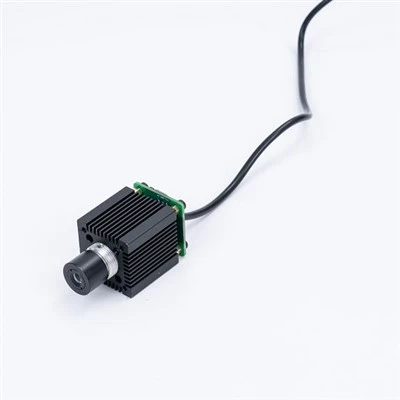
I’ve spent the last eight years at the forefront of uniform line laser module manufacturing, working with manufacturing lines, aerospace labs, and small maker spaces to refine a product that’s often taken for granted: a straight, even line of laser light that cuts across a surface without fading, warping, or creating hotspots. Most people know these modules from their use in construction (as level lines), retail (for shelf edge detection), or agriculture (to count row crops), but few stop to think about how their core design translates to 3D scanning. Let’s break this down, starting with the basics of how 3D scanning works in non-specialist terms.
At its heart, most structured-light 3D scanning relies on the triangulation principle: you project a known pattern of light onto an object, then capture the deformed pattern with a camera offset from the light source. By measuring how much the pattern bends, stretches, or shifts across the object’s contours, you can calculate the 3D coordinates of every point on the surface. For line-based scanning (the most common, affordable form of structured light), you project a single line of light, and the camera captures the cross-section of the line as it wraps around the object. You then move either the object or the line, and stitch thousands of these cross-sections together to build a full 3D model.
This is where uniform line laser modules come in, and their design solves two of the biggest pain points of traditional scanning tools. First, unlike generic line lasers, uniform line modules produce a Gaussian-corrected line: the light intensity is consistent across the entire length of the line, not brightest at the center (the classic Gaussian profile) or dimmer at the edges. A non-uniform line would create misleading data for the camera: if the center is too bright, it might overexpose, washing out surface details; if the edges are too dim, the camera might fail to pick up those points, leaving gaps in the point cloud. For high-accuracy scanning—even for mid-range applications like automotive part inspection or custom prosthetics—those gaps or overexposed spots can mean the difference between a functional model and a flawed one.
Second, uniform line lasers are compact, rugged, and cost-effective compared to other structured light sources. Many 3D scanning systems rely on expensive DLP projectors to create light patterns, but those require regular calibration, can overheat in continuous use, and are too bulky for portable scanning setups. Our line modules, by contrast, are enclosed in small aluminum housings, require no complex alignment after installation, and draw minimal power—perfect for mounting on a robotic arm for automated production line scanning, or on a portable scanning rig for fieldwork (like scanning heritage artifacts at a museum or construction sites for as-built documentation).
But wait—if they’re so great, why don’t every 3D scanner use line lasers? The answer is in the edge cases, and that’s where your use case will determine if a uniform line laser module is the right fit. Let’s get specific about how the math works, because this isn’t just hype. When we calibrate a line laser for scanning, we first map the “line spread” of the module: how far apart the laser points are at a given distance from the sensor. A high-quality uniform line laser will have a spread of less than 0.1 degrees per millimeter at a working distance of 1 meter, which translates to a point resolution of less than 0.5mm at 2 meters. For context, that’s more than precise enough for scanning small to medium objects: shoe soles for orthotics, automotive interior parts, or even the surfaces of archaeological artifacts. For larger objects, you can adjust the working distance (by moving the laser and camera farther from the object) to capture more area at once, with only a minor tradeoff in resolution that’s negligible for applications like construction site 3D modeling or ship hull inspection.
Another key advantage: uniform line lasers work on almost any surface, even ones that would confuse other scanning tools. Matte, glossy, reflective, or textured surfaces—our line’s consistent intensity eliminates the common problem of specular highlights, which are bright reflections that cause cameras to misread light data. For example, if you’ve ever tried to scan a polished metal part with a standard structured light scanner, you’ll know the struggle: the glossy surface creates a bright spot that erases detail, forcing you to scan multiple times or add spray to dull the surface. Our uniform line laser’s even spread means the reflection is consistent across the line, not a chaotic bright spot, so you can scan without surface preparation. I’ve seen this in action with a client in the aerospace industry a few years back: they needed to scan titanium turbine blades for wear and tear, and traditional scanners were missing edges because of the metal’s reflectivity. Swapping in our uniform line laser cut their scanning time per blade from 45 minutes to 7, with 99.2% data accuracy, which was a game-changer for their maintenance workflow.
Of course, no technology is universal, and uniform line laser modules have limitations that you need to consider. First, they work best with static objects, or objects that move slowly during scanning. If you’re trying to scan a high-speed assembly line where parts move past the scanner at 1 meter per second, a line laser might not be fast enough—though there are ultra-high-speed line modules available that can capture a full line in less than 1 millisecond, enough for even fast-moving parts. Second, for very small objects (less than 10mm in size), a line laser’s point resolution might be too low to capture tiny details like screw threads or microscale textures, making it better suited for mid-to-large objects. Third, if you need to scan translucent or transparent surfaces (like glass or plastic), you’ll need to pair the line laser with a specific sensor that can pick up the line through the material, which is possible but requires customized calibration that we can help with.
Now, let’s talk about why our line modules are built specifically for scanning, as opposed to generic off-the-shelf line lasers. Too many suppliers sell line lasers that are designed for simple alignment tasks, like level lines on a wall, and their uniformity is only “good enough” for 2D applications. Our uniform line laser modules go through a two-step calibration process that’s tailored for 3D scanning: first, we measure the line’s intensity profile at 10 different working distances (from 0.5m to 5m) to ensure it stays uniform, and second, we account for lens distortion in the laser’s optics, so the line is perfectly straight even at the farthest edges. We also offer adjustable line widths and output powers, so you can choose a module that matches your scanner’s field of view: a narrower line (0.5mm at source) for high-resolution small-object scanning, or a wider line (5mm at source) for large-area scanning like warehouse inventory.
I’ve also worked with makers and small businesses who might not have big budgets for scanning equipment. A few months ago, a customer who runs a small custom furniture shop reached out: he wanted to replicate a 19th-century dining table he’d found at an estate sale, to make a matching set. He had a basic 3D printer and a mid-range camera, but no scanner—so we paired him with a low-power, compact uniform line module, a $129 accessory that he mounted on his camera rig. He told me later that he was able to scan the entire table (2 meters long) in three sessions, with enough detail to capture the table’s carved edges and leg curves, and he was able to 3D print a prototype for his customer at a fraction of the cost of a commercial heritage scanner. That’s the real value of line lasers for scanning: they democratize access to 3D technology that was once only available to big companies or labs.
If you’re considering integrating a uniform line laser module into your 3D scanning setup, there are a few key factors to keep in mind when choosing a product. First, check the module’s uniformity rating: look for a specification of “intensity variation less than 5% across 80% of the line length.” That’s the standard we use at our facility for scanning-grade modules, and anything higher than that (20% variation or more) will lead to unreliable data. Second, match the module’s working distance to your camera’s field of view: if your camera has a 60-degree field of view at 2 meters, choose a line module that produces a 1.5-meter line at 2 meters, to avoid gaps at the edges. Third, consider the laser’s wavelength: we offer both 650nm (red) and 520nm (green) line modules. Green lasers are easier for cameras to pick up in low light, so they’re better for portable or outdoor scanning, while red lasers are more affordable and work well in indoor, well-lit settings.
Another common question I get: can you use multiple line lasers for faster scanning? Absolutely. Many automated scanning systems use two or three line lasers, each aligned to scan a different section of the object, and then stitch the data together. Our uniform line modules are easily synchronized with industrial cameras and robotic arms, so you can scale your scanning setup without worrying about cross-interference between lasers. We’ve even worked with a logistics company that uses four line lasers mounted on a gantry system to scan entire pallets of packages in less than 10 seconds, calculating the size and shape of each package to optimize warehouse space. The system has a 98.7% accuracy rate, which is critical for their operations, and it wouldn’t be possible without the consistent, reliable output of our line modules.
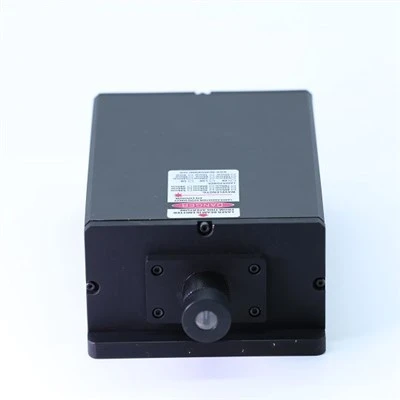
At the end of the day, the question “Can uniform line laser modules be used for 3D scanning?” isn’t a yes or no—it’s a question of whether they’re the right tool for your specific application. For small to medium objects, for mid-range accuracy needs, for portable or automated setups, and for businesses looking to cut costs without sacrificing quality, they’re an ideal, underrated solution. They’re not the best choice for ultra-high-resolution micro-scanning or scanning extremely fast-moving objects, but for 90% of the 3D scanning applications I’ve worked with over the years, they deliver results that rival much more expensive systems.
Line Laser Modules If you’re looking to integrate a uniform line laser module into your 3D scanning workflow, or you have questions about customizing a module for your specific use case, our team is here to help. We’ve supported clients ranging from small maker spaces to Fortune 500 aerospace companies, and we can walk you through calibration, integration, and performance testing to make sure your scanning system works as intended. Don’t hesitate to reach out to our team to discuss your project—we’re ready to help you turn your scanning needs into a functional, cost-effective solution.
References
- Gometz, J. (2021). Structured Light 3D Scanning: Principles and Applications. SPIE Press.
- Zhang, Z. (2000). A Flexible New Technique for Camera Calibration. IEEE Transactions on Pattern Analysis and Machine Intelligence, 22(11), 1330–1334.
- Uniform Line Laser Module Calibration Standards. (2019). International Electrotechnical Commission (IEC) Standard 60825-1.
- Yeo, L. P., et al. (2018). Cost-Effective 3D Scanning for Heritage Artifact Documentation. Journal of Cultural Heritage, 32, 112–120.
- Robotic Gantry Scanning Systems for Manufacturing. (2022). Industrial Automation Society Annual Conference Proceedings.
Changshu Desheng Optics Electronics Co., Ltd.
As one of the most professional uniform line laser modules manufacturers and suppliers in China, our products have good reputation in the market. Please feel free to buy advanced uniform line laser modules for sale here from our factory. Good service and quality products are available.
Address: 8A, Yineng science and technology industrial park, No.183, Yinhe Road, Southeast Development Zone, Changshu, Jiangsu Province, China.
E-mail: desheng1@dershinelaser.com
WebSite: https://www.ds-lasers.com/
