As an inductor supplier deeply entrenched in the industry, I’ve witnessed firsthand how the manufacturing process can significantly impact the quality of an inductor. In this blog post, I’ll delve into the key aspects of the manufacturing process and explain how they contribute to the overall quality of the inductors we supply. Inductor
Material Selection
The journey of inductor quality begins with the selection of materials. The core material, wire, and insulation all play crucial roles.
Core Material
The core is the heart of an inductor. Different core materials have distinct magnetic properties, which directly affect the inductor’s performance. For example, ferrite cores are widely used due to their high magnetic permeability, which allows for high inductance values in a relatively small size. They also have low eddy current losses at high frequencies, making them ideal for applications such as switching power supplies and RF circuits.
On the other hand, powdered iron cores offer better saturation characteristics. They can handle higher currents without significant degradation of inductance. This makes them suitable for power applications where high current handling is required, such as in DC – DC converters.
The quality of the core material itself also matters. Impurities or inconsistent grain structures in the core can lead to variations in magnetic properties. At our company, we source core materials from trusted suppliers and conduct rigorous quality checks. We use advanced testing equipment to measure the magnetic permeability, hysteresis losses, and saturation flux density of the cores. Only materials that meet our strict quality standards are used in the manufacturing process.
Wire
The wire used in an inductor affects its DC resistance (DCR) and current – carrying capacity. Copper is the most commonly used wire material because of its high electrical conductivity. The gauge of the wire is an important factor. A thicker wire has lower DCR, which means less power loss in the form of heat. However, using a very thick wire may increase the size of the inductor.
We carefully select the wire gauge based on the specific requirements of the inductor. For high – current applications, we use thicker wires to minimize DCR. Additionally, we ensure that the wire has a high – quality insulation coating. This insulation prevents short – circuits between adjacent turns of the wire, which could lead to a significant reduction in the inductor’s performance.
Winding Process
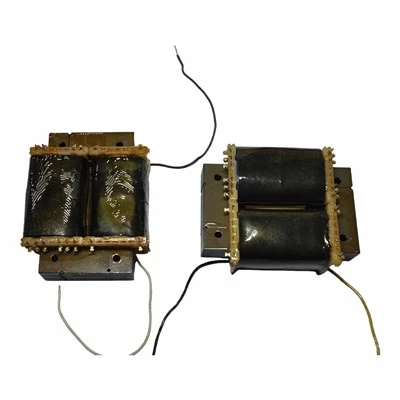
The winding process is another critical step that affects the quality of an inductor. How the wire is wound around the core can impact the inductance value, the distribution of the magnetic field, and the mechanical stability of the inductor.
Winding Technique
There are different winding techniques, such as single – layer winding, multi – layer winding, and toroidal winding. Single – layer winding offers low inter – turn capacitance, which is beneficial for high – frequency applications. It also provides a more uniform magnetic field distribution. However, it may not be suitable for achieving high inductance values in a small space.
Multi – layer winding allows for higher inductance values in a smaller footprint. But it increases the inter – turn capacitance, which can limit the inductor’s performance at high frequencies. Toroidal winding provides a closed – loop magnetic path, which reduces magnetic leakage and improves the efficiency of the inductor.
We choose the appropriate winding technique based on the application requirements. For example, for RF inductors, we often use single – layer winding to minimize inter – turn capacitance. For power inductors, multi – layer or toroidal winding may be more suitable to achieve the required inductance and current – carrying capacity.
Winding Tension and Precision
The tension of the wire during winding is crucial. If the tension is too high, it can damage the wire insulation or cause stress on the core, which may affect the magnetic properties. If the tension is too low, the turns of the wire may not be tightly packed, leading to inconsistent inductance values.
We use automated winding machines that can precisely control the winding tension. These machines also ensure high – precision winding, with accurate turn counts and uniform spacing between turns. This precision is essential for achieving consistent and reliable inductor performance.
Assembly and Packaging
After the winding process, the inductor needs to be assembled and packaged properly. This step is important for protecting the inductor from environmental factors and ensuring its long – term reliability.
Assembly
During assembly, the inductor is often attached to a base or a terminal. The quality of the connection between the wire and the terminal affects the electrical performance of the inductor. A poor connection can increase the DCR and cause heat generation, which may lead to premature failure of the inductor.
We use high – quality soldering or welding techniques to ensure a strong and low – resistance connection between the wire and the terminal. We also perform visual inspections and electrical tests on the assembled inductors to ensure that the connections are reliable.
Packaging
The packaging of the inductor protects it from moisture, dust, and mechanical damage. We use different types of packaging, such as plastic housing, epoxy coating, or tape – and – reel packaging. The choice of packaging depends on the application and the environment in which the inductor will be used.
For example, inductors used in harsh environments may be encapsulated in epoxy to provide better protection against moisture and chemicals. Tape – and – reel packaging is commonly used for mass – production applications, as it allows for easy handling and automated pick – and – place assembly.
Quality Control and Testing
Throughout the manufacturing process, quality control and testing are essential to ensure the high quality of the inductors.
In – process Quality Checks
We perform in – process quality checks at various stages of the manufacturing process. For example, during the material selection stage, we check the physical and chemical properties of the core material and the wire. During the winding process, we monitor the winding tension, turn count, and winding precision.
These in – process checks allow us to identify and correct any potential issues early in the manufacturing process, which helps to reduce the number of defective products.
Final Testing
Before the inductors are shipped to our customers, they undergo a series of final tests. These tests include measuring the inductance value, DCR, quality factor (Q), and saturation current. We use state – of – the – art testing equipment that can provide accurate and reliable test results.
We also perform temperature cycling tests and humidity tests to ensure that the inductors can withstand different environmental conditions. Only inductors that pass all of our quality tests are considered for shipment.
Conclusion
The manufacturing process of an inductor is a complex and multi – step process, and each step has a significant impact on the quality of the final product. From the selection of high – quality materials to the precise winding process, proper assembly and packaging, and rigorous quality control and testing, every detail matters.
As an inductor supplier, we are committed to providing our customers with high – quality inductors that meet their specific requirements. Our strict adherence to quality standards in every aspect of the manufacturing process ensures that our inductors offer reliable performance, long – term durability, and excellent electrical characteristics.
Flyback Transformer If you are in the market for high – quality inductors for your applications, we invite you to reach out and start a discussion with us. Our team of experts is ready to help you choose the right inductors and provide you with the best solutions. Contact us today to explore how our inductors can enhance the performance of your products.
References
- Electromagnetic Induction Theory, Principles and Applications, John Wiley & Sons
- Handbook of Inductor Design and Applications, CRC Press
- Power Electronics: Converters, Applications, and Design, Prentice Hall
Dongguan Hensiron Electric Co., Ltd.
As one of the most professional inductor suppliers in China, we have world-leading production equipment and strong manufacturing capabilities. Please feel free to buy high quality inductor made in China here from our factory. Customized orders are welcome.
Address: Building 4, Xinxing Industrial Zone, Wangao Road, Wanjiang Street, Dongguan City, China
E-mail: jessica@dghensiron.com
WebSite: https://www.dghensiron.com/
