Can steel wire hoses be bent easily? Steel Wire Hose
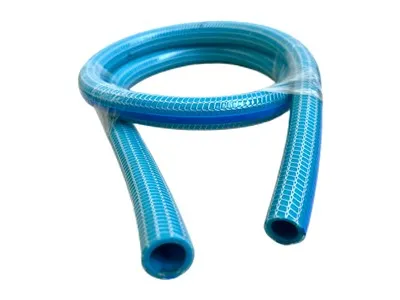
As a supplier of steel wire hoses, I often encounter customers who are curious about the bendability of our products. This is a crucial aspect, as it directly impacts the usability and adaptability of steel wire hoses in various applications. In this blog, I’ll delve into the factors that influence the bendability of steel wire hoses, share some real – world examples, and provide insights to help you make informed decisions when it comes to purchasing.
Understanding the Structure of Steel Wire Hoses
Before discussing bendability, it’s essential to understand the basic structure of steel wire hoses. A typical steel wire hose consists of an inner tube, a layer of steel wire reinforcement, and sometimes an outer cover. The inner tube is usually made of materials like rubber or plastic, which provide a smooth surface for the flow of fluids or gases. The steel wire reinforcement, which can be in the form of braids or spirals, gives the hose its strength and flexibility. The outer cover, if present, protects the hose from external factors such as abrasion, chemicals, and weather conditions.
Factors Affecting Bendability
1. Steel Wire Type and Configuration
The type of steel wire used in the hose plays a significant role in its bendability. High – quality stainless steel wires are often preferred due to their corrosion resistance and relatively good flexibility. For instance, 304 or 316 stainless steel wires are commonly used in applications where the hose will be exposed to moisture or chemicals.
The configuration of the steel wire, whether it’s a spiral or braided design, also affects bendability. Spiral – wound steel wire hoses generally offer better flexibility in one direction, making them suitable for applications where the hose needs to be bent in a specific curve. Braided steel wire hoses, on the other hand, provide more uniform flexibility in all directions, which is beneficial for applications where the hose may need to be bent in multiple directions.
2. Inner Tube Material
The material of the inner tube has an impact on the overall bendability of the hose. Softer inner tube materials, such as certain types of rubber, allow for greater flexibility. For example, natural rubber inner tubes are known for their excellent flexibility and resilience, making them easier to bend compared to harder plastic inner tubes. However, the choice of inner tube material also depends on the application requirements, such as the type of fluid or gas being transported.
3. Hose Diameter and Wall Thickness
The diameter and wall thickness of the steel wire hose are important factors in determining its bendability. Generally, smaller – diameter hoses are easier to bend than larger – diameter ones. This is because the curvature required for a small – diameter hose is less severe compared to a large – diameter hose.
Similarly, thinner – walled hoses are more flexible than thicker – walled ones. A thinner wall allows the hose to deform more easily when bent, but it may sacrifice some strength and durability. So, there is a trade – off between bendability and the hose’s ability to withstand pressure and external forces.
Real – World Applications and Bendability
Let’s look at some real – world applications to understand how bendability matters.
1. Automotive Industry
In the automotive industry, steel wire hoses are used for various purposes, such as fuel delivery, coolant circulation, and air intake. These hoses need to be bent to fit the complex layout of the engine compartment. For example, a fuel hose may need to be bent around other engine components to reach the fuel injection system. In this case, a highly bendable hose is essential to ensure proper installation and prevent kinking, which could disrupt the fuel flow.
2. Industrial Machinery
In industrial machinery, steel wire hoses are used to transfer hydraulic fluids, compressed air, and other substances. The hoses often need to be bent to connect different parts of the machinery. For instance, in a hydraulic press, the hoses that carry hydraulic fluid need to be bent to reach the cylinders. A hose with good bendability can be easily routed around obstacles and connected to the required components, reducing the installation time and cost.
3. Home Appliances
In home appliances, such as washing machines and dishwashers, steel wire hoses are used for water supply. These hoses need to be bent to fit under sinks or behind appliances. A bendable hose makes the installation process easier for homeowners or technicians, and also reduces the risk of damage to the hose during installation.
Testing the Bendability of Steel Wire Hoses
As a supplier, we conduct rigorous testing to ensure the bendability of our steel wire hoses meets the industry standards. One common test method is the minimum bend radius test. The minimum bend radius is the smallest radius to which a hose can be bent without causing permanent damage or a significant reduction in its performance.
We measure the minimum bend radius by gradually bending the hose around a mandrel of a known radius until the hose shows signs of kinking, cracking, or a decrease in the flow rate. The results of these tests are used to determine the bendability rating of our hoses and to provide accurate information to our customers.
Tips for Bending Steel Wire Hoses
If you need to bend a steel wire hose, here are some tips to keep in mind:
- Use the right tools: A bending tool, such as a hose bender, can help you achieve a smooth and uniform bend without causing damage to the hose.
- Bend gradually: Avoid sharp bends or kinks, as they can reduce the flow rate and damage the hose. Instead, bend the hose gradually over a larger radius.
- Consider the temperature: The flexibility of steel wire hoses can be affected by temperature. In cold temperatures, the hose may become stiffer, making it more difficult to bend. If possible, warm the hose slightly before bending to increase its flexibility.
Conclusion
In conclusion, steel wire hoses can be bent to a certain extent, depending on factors such as the type of steel wire, inner tube material, hose diameter, and wall thickness. At our company, we understand the importance of bendability in different applications, and we strive to produce steel wire hoses that offer the right balance of flexibility, strength, and durability.
If you are in need of high – quality steel wire hoses, we would be more than happy to discuss your requirements. Feel free to reach out to us to start a procurement discussion. We are committed to providing you with the best products and services.
PVC Suction Pipe References
- ASME B31.1 – Power Piping. American Society of Mechanical Engineers
- ASTM D380 – Standard Specification for Rubber – Covered Hydraulic Hose Assemblies for Oil and Water – Base Fluids
- ISO 1402 – Rubber and plastics hoses and hose assemblies – Rubber covered spiral wire reinforced types – Specification
Weifang Xinzhiyuan Plastic Co., Ltd.
As one of the most experienced steel wire hose manufacturers and suppliers in China, we offer a wide range of products with superior quality. Please feel free to wholesale premium steel wire hose made in China here from our factory. We also accept customized orders.
Address: No. 700, Tongle Street, Economic Development Zone, Changle County, Weifang City, Shandong Province
E-mail: hua@xzypvchose.com
WebSite: https://www.pvchose-xzy.com/
