Well, folks! As a supplier of drilling and tapping centers, I’ve seen a lot of customers scratching their heads over how to adjust the drilling and tapping parameters of these machines. It’s not as hard as it sounds, but it does require a bit of knowledge and some trial – and – error. In this blog, I’ll share some tips that’ll help you get the most out of your drilling and tapping center. Drilling and tapping center
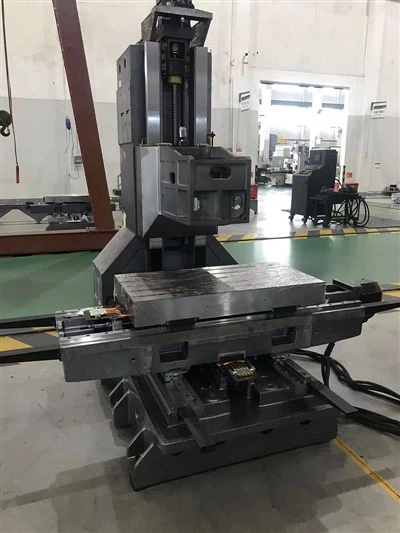
First things first, why is it important to adjust the parameters? Well, if you’re not using the right settings, you might end up with a poor – quality hole or a broken tap. Parameters like spindle speed, feed rate, and depth of cut play a crucial role in the performance and the lifespan of your tools.
Let’s start with spindle speed. Spindle speed is measured in revolutions per minute (RPM). The correct spindle speed largely depends on the material you’re working on. For example, if you’re drilling into aluminum, you can generally use a higher RPM compared to when you’re working on stainless steel. Aluminum is a softer material, so the drill bit can cut through it more easily at a faster speed.
A good rule of thumb is to start with the manufacturer’s recommendations. Most tool manufacturers provide a chart that shows the recommended RPM for different materials and drill bit sizes. But these are just starting points. You might need to make some adjustments based on your specific situation.
If you set the spindle speed too high, the drill bit can overheat. This not only shortens the life of the bit but can also cause the material to melt or deform around the hole. On the other hand, if the speed is too low, the drill bit might not cut efficiently, and you could end up with a rough – looking hole. So, finding the sweet spot is key.
Next up is the feed rate. The feed rate is how fast the drill bit moves into the material. It’s usually measured in inches per revolution (IPR) or millimeters per revolution (MPR). Just like spindle speed, the feed rate also depends on the material and the drill bit size.
In general, you want to use a higher feed rate for softer materials and a lower feed rate for harder materials. If your feed rate is too high, you risk breaking the drill bit or the tap. The bit might not be able to remove the material fast enough, and it can get stuck. On the contrary, a feed rate that’s too low can lead to excessive wear on the bit, as it’s constantly rubbing against the material without making much progress.
For tapping, you also need to pay attention to the thread pitch. The thread pitch is the distance between adjacent threads. You need to adjust the feed rate so that it matches the thread pitch of the tap you’re using. If the feed rate is off, you’ll end up with either over – tapped or under – tapped holes.
Let’s talk about the depth of cut. This is how deep the drill bit or tap goes into the material in a single pass. It’s important to control the depth of cut to avoid putting too much stress on the tool. For drilling, you can usually make multiple passes to achieve the desired depth, especially for thicker materials.
If you try to cut too deep in one go, the drill bit can get overloaded. This can lead to broken bits or inaccurate holes. With tapping, it’s also crucial to control the depth to make sure the threads are formed correctly and fully.
Now, I know all these rules and guidelines can be a bit overwhelming, especially if you’re new to using a drilling and tapping center. That’s where some hands – on experience comes in. It’s a good idea to start with some scrap material. Set up the machine according to the recommended parameters, and then make a few test cuts. Inspect the holes and the threads. If they’re not up to par, adjust the parameters accordingly.
You can also keep a log of your test results. Note down the spindle speed, feed rate, depth of cut, the type of material, and the drill bit or tap size. This way, you can refer back to it later when you’re working on similar projects. It’ll save you a lot of time and frustration in the long run.
Another thing to consider is coolant. Using coolant can make a huge difference in the performance of your drilling and tapping operations. Coolant helps to lubricate the drill bit or tap, reducing friction and heat. It also helps to flush away the chips that are produced during the cutting process.
For different materials, you might need different types of coolant. For example, water – based coolants are often used for general – purpose machining, while oil – based coolants are better for high – precision or high – speed operations. Make sure you’re using the right coolant and that it’s flowing at the correct rate.
When it comes to tool selection, this is also closely related to parameter adjustment. Different drill bits and taps are designed for different materials and applications. A high – speed steel (HSS) drill bit might be a good choice for softer materials like wood or plastics, while a carbide – tipped bit is better suited for harder metals.
You need to make sure that the tool you’re using can handle the parameters you’ve set. If you’re using a low – quality tool, it might not perform well even if you’ve adjusted the parameters perfectly. So, invest in good – quality tools and make sure they’re sharp.
Training your operators is also essential. Even if you have the best – adjusted machine and the highest – quality tools, if your operators don’t know what they’re doing, it won’t work well. Provide proper training on how to set up the machine, adjust the parameters, and operate the drilling and tapping center safely and efficiently.
In conclusion, adjusting the drilling and tapping parameters of a drilling and tapping center is a combination of following the rules, having hands – on experience, and continuous learning. It might take some time and effort, but once you get the hang of it, you’ll be able to produce high – quality holes and threads every time.
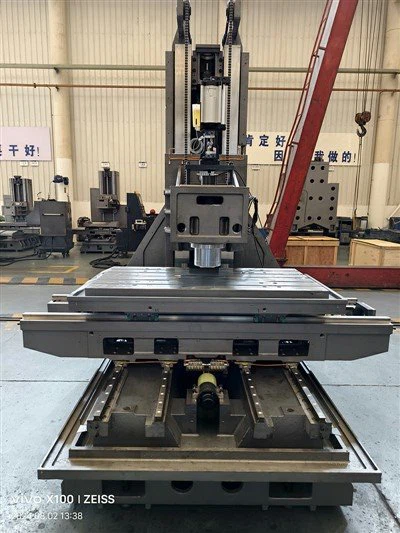
If you’re in the market for a drilling and tapping center or need more advice on parameter adjustment, don’t hesitate to reach out to us. We’re here to help you make the most of your machining operations.
XY Linear Way Vertical Machining Center References:
- General machining handbooks from major machining tool manufacturers.
- Industry – specific trade magazines on CNC machining.
Smartech Machinery & Equipment Co., Ltd.
As one of the most professional tapping center machine manufacturers and suppliers in China, we also support customized service. Please rest assured to buy bulk tapping center machine made in China here from our factory. Contact us for more details.
Address: Room 2832, Changping Commercial Mansion, Shihua Road, Futian Free Trade Zone, Shenzhen, China
E-mail: smartech@smartechcnc.cn
WebSite: https://www.smartech-cnc.com/
