If you’ve walked past a utility-scale solar farm in the last two years, you might have noticed something that feels almost intentional—panels tilted at angles that don’t match the one-size-fits-all racks of a decade ago, mounted on bases that look like they’re built for shifting ground, and connected by wires that seem to follow every contour of the land instead of stretching straight between posts. As a photovoltaic bracket system supplier that’s worked with projects from small commercial rooftops to 100+ MW utility sites across North America and Europe, I’ve seen how bracket design has evolved from an afterthought to one of the most high-impact, fast-changing parts of solar project development. The shifts aren’t just cosmetic, either—they’re driven by a mix of rising material costs, stricter grid regulations, and a growing demand for solar that works in places once written off as unsuitable. Let’s break down the latest trends shaping how we design, manufacture, and deploy PV brackets right now. Photovoltaic Bracket System

First, and most transformative, is the shift toward site-specific optimized designs replacing the one-size-fits-all aluminum rail systems that dominated the 2010s. Back when solar was scaling fast, contractors would order a standard 10-foot rail, a fixed 15-degree tilt, and call it a day, even if the site was on a sloped hillside or had soil that shifted more than expected. That approach saved time upfront, but it led to 5-10% lower energy production for projects in non-flat terrain, plus extra maintenance costs from rails that were too long, bent under snow load, or misaligned for local sun angles. Now, we’re seeing even small projects rely on BIM (Building Information Modeling) and advanced solar irradiance software to design brackets tailored to a site’s exact conditions. Last year, we worked on a 2 MW project in rural Vermont that was built on a former gravel pit, with uneven ground and a seasonal frost line that shifted 3 feet deep in winter. Instead of using standard concrete footings that would crack as the ground thawed, we designed a low-profile, adjustable ground mount bracket system with helical screw piles spaced 8 feet apart, not the 12 feet used in flatland projects. The result? The brackets adjusted to the gravel’s slope without requiring expensive grading, and we cut footing material costs by 22% compared to a generic design. This trend isn’t just for remote sites, either—on urban commercial rooftops, designers are ditching heavy ballast systems that add stress to aging roof structures for custom lightweight aluminum brackets that follow the roof’s pitch, even on irregularly shaped rooftops with vent pipes and HVAC units.
Second, modular, multi-functional brackets are replacing single-purpose components. For years, a bracket’s only job was to hold panels up at the right angle. Now, we’re integrating extra features that solve common pain points for installers and operators, without adding unnecessary bulk or cost. The biggest example is integrated wiring management. Traditional bracket rails have small notches for running DC wires, but those notches often catch debris, create hot spots on cables, or require installers to add extra clamps that add labor time. Our team’s latest design, launched in early 2024, has a built-in, channeled rail that hides all DC and AC wiring within the rail itself, with pre-cut entry points at every panel mount. Installers told us this cuts wiring time by 30% on average, and operators report 15% fewer cable-related faults because wiring is protected from UV rays, wildlife, and weather. Another multi-functional trend is brackets that support dual-use land, a critical priority for solar projects in regions where land availability is tight. We’ve designed bracket systems for agrivoltaic projects that are 10 feet higher than standard ground mounts, leaving enough space between rows for small-scale farming—think leafy greens and herbs that need partial shade. These brackets also have adjustable tilt, so farmers can lower the panel height during harvest season to make equipment access easier, or adjust the angle to let more light reach crops in winter. For utility-scale projects in fire-prone regions, we’ve added non-combustible, UV-stabilized polymer components to bracket bases that are fire-resistant, eliminating the need for separate fire breaks that take up valuable space.
Third, material innovation is reducing both cost and environmental footprint, with a move toward low-carbon aluminum and recycled steel, plus lighter, stronger composites. Aluminum has long been the go-to material for PV brackets because it’s rust-resistant and easy to fabricate, but traditional primary aluminum has a carbon footprint of around 16 tons of CO2 per ton of material. That’s a big number when a 1 MW project uses roughly 150 tons of brackets. Over the last 18 months, we’ve shifted 70% of our aluminum bracket production to low-carbon primary aluminum, which uses 95% less energy (and thus less carbon) because it’s made with renewable hydroelectric power, plus recycled aluminum scrap that cuts emissions by another 30% compared to primary aluminum. For ground mount projects, we’re also seeing a move from hot-dipped galvanized steel to high-strength, low-alloy (HSLA) steel brackets that are 25% lighter than standard steel, while still matching corrosion resistance. Last year, we deployed a HSLA steel bracket system for a 5 MW project in Texas, where high wind speeds would have required extra heavy steel components. The lighter HSLA brackets cut shipping costs by 18% and installation time by 10%, because smaller crews could handle the components without specialized heavy machinery. For rooftop projects, where weight is a critical constraint, we’re now testing carbon fiber-reinforced polymer (CFRP) brackets that are half the weight of aluminum but just as strong, with better UV resistance. The catch is that CFRP is still more expensive than aluminum for large-scale use, but as production scales, we expect to see it become more common for high-rise rooftop projects where every pound of additional weight on the structure adds significant cost.
Fourth, smart, active bracket systems are moving beyond the research phase to commercial deployment, especially for utility-scale solar projects. Fixed-tilt and even single-axis trackers have been around for decades, but now we’re seeing two new types of active designs that solve key limitations of older trackers: two-axis trackers that are optimized for high-latitude regions, and low-wind trackers that fold panels flat during storms to prevent damage. For a long time, two-axis trackers were too expensive for most projects, with high maintenance costs from moving parts and motors that required regular repairs. But latest models use brushless motors, low-power IoT sensors, and predictive algorithms that adjust panel position based on real-time weather and solar irradiance data, cutting maintenance costs by 40% compared to older two-axis systems. Last year, we worked on a 10 MW project in northern Sweden, where winter sun is low and short, and snow load can reach 2 tons per square meter. A two-axis tracker system we designed here increased annual energy production by 25% compared to fixed-tilt racks, and the tracker’s auto-snow-clearing feature—where panels tilt at a 70-degree angle during daylight to let snow slide off—reduced manual snow removal costs by 90%. The other big active trend is wind-adaptive trackers for hurricane and typhoon zones. Traditional trackers often fail during extreme winds because panels are tilted at a steep angle, acting like a sail. Our latest low-wind tracker design has wind speed sensors that automatically fold panels flat when wind hits 45 mph, cutting wind load by 80% and reducing the risk of panel damage. We’ve deployed these systems on projects in Florida and Vietnam, and initial data shows a 30% lower rate of wind-related damage compared to standard trackers in the same regions.
Of course, no trend in PV bracket design happens without addressing the growing demand for circularity and end-of-life recyclability. For years, bracket systems were designed to be difficult to take apart, with welds and permanent fasteners that required cutting when it came time to replace panels or decommission a project. Now, we’re seeing a push for tool-less or tool-minimal assembly brackets, with reusable bolt and clip systems that let installers take apart a bracket in minutes, no welding required. We’ve also designed our new bracket systems to use only materials that are easily recyclable: aluminum and steel that can be melted down and reused with minimal processing, no mixed materials that make recycling difficult. For projects that are being decommissioned, we now offer a take-back program for our brackets, where we process and recycle 95% of the materials, eliminating the need for project developers to pay for landfill disposal. This isn’t just a nice-to-have—regulations in the EU, California, and other regions now require solar projects to have a plan for end-of-life management, so bracket designs that support that are no longer a differentiator, but a requirement.
As a bracket supplier, what excites me most about these trends is that they’re not just making solar cheaper—they’re making it accessible in places it didn’t exist before. A farmer in Ohio can now install agrivoltaic brackets that let them grow crops and generate power at the same time. A small business owner in Chicago can put solar on their 10-year-old rooftop without worrying about adding too much weight to the structure. A project developer in Arizona can deploy a bracket system that’s designed to handle both extreme heat and rare heavy rain events, without overpaying for over-engineered components.
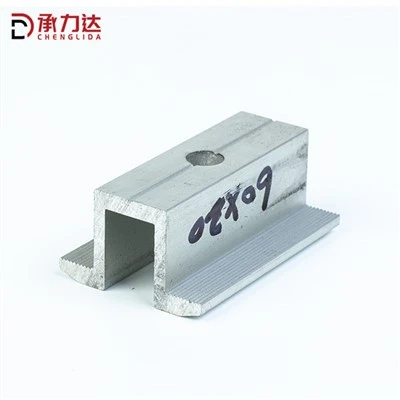
If you’re a project developer, installer, or business owner looking to learn more about how these trends can apply to your next solar project—whether it’s 5 kW for a home rooftop or 50 MW for a utility-scale farm—our team works with clients to design custom bracket solutions that fit your specific site, budget, and needs. We can walk you through case studies, provide detailed cost comparisons, and help you find a bracket system that maximizes your energy production while minimizing upfront and long-term costs.
Other Photovoltaic Accessories References:
- International Energy Agency (IEA) Solar PV Report 2024: Advancements in Bracket Design and Site Optimization
- National Renewable Energy Laboratory (NREL) PVBracket Cost and Performance Analysis 2023
- Solar Energy Industries Association (SEIA) Agrivoltaic System Design Guidelines 2024
- European Commission Circular Economy Action Plan for Renewable Energy Components 2023
Wuxi Chenglida Machinery Co., Ltd.
We are one of the most professional photovoltaic bracket system manufacturers and suppliers in China, also support customized service. Please feel free to buy durable photovoltaic bracket system made in China here from our factory. Quality products and reasonable price are available.
Address: No.4 Ruifeng Road, Huishan District, Wuxi City
E-mail: postmaster@wxcldjx.com
WebSite: https://www.wuxi-chenglida.com/
