If you’ve ever walked the snack aisle of a grocery store, flipped through a brochure mailed to your home, or checked the label on a personal care product bottle, chances are you’ve interacted with cast polypropylene (CPP) film. As a CPP supplier, I get asked all the time by printers, brand owners, and packaging operators: “What makes a CPP film printable?” It’s not a random quirk of the material—printability isn’t just about whether ink sticks to plastic. It’s a calculated combination of surface chemistry, physical structure, and manufacturing precision that turns a plain, flexible film into a functional part of a product’s identity. Over the 12 years I’ve worked in this space, I’ve seen firsthand how getting printability right makes or breaks a packaging run, a brand’s launch, or a printer’s bottom line. Today, I want to pull back the curtain on what printability of CPP film actually means, how it’s measured, and why it matters for anyone relying on this material. Cast Polypropylene Film
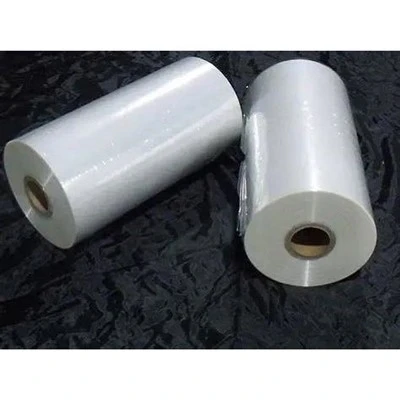
Let’s start with the basics: CPP film is made by melting polypropylene resin, extruding it through a flat die, and casting it onto a chilled roller to solidify into a thin, uniform sheet. Unlike biaxially oriented polypropylene (BOPP) film, which is stretched in two directions after casting, CPP stays in a mostly amorphous, non-oriented state—this gives it softness, good heat-sealability, and a naturally smooth surface that’s ideal for printing. But that smoothness is also CPP’s biggest printability challenge.
In its virgin, as-cast state, polypropylene is hydrophobic. That means it repels water, and low surface energy—usually around 28 to 32 dynes per centimeter (dyne/cm)—is a fancy way to describe how much a liquid will spread across a solid surface. Ink, whether it’s water-based, solvent-based, or UV-cured, needs a surface high enough in energy to wet out, or spread evenly, without beading up, smudging, or peeling off. If CPP’s surface energy is too low, ink sits on top like water on a waxed car, leading to uneven color, missing text, or print defects that force you to scrap entire rolls. That’s why the first and most critical component of CPP printability is surface modification, and the gold standard here is corona treatment.
I know what some of you are thinking: “Corona treatment? That’s not new.” But not all corona is created equal, and as a supplier, we’ve spent years refining our process to hit the exact surface energy threshold for printing. When we run CPP film through a corona treater, we expose its surface to a low-temperature plasma of ionized gas, which breaks the non-polar bonds of the polypropylene molecules and adds polar groups (like hydroxyl and carbonyl groups) to the surface. This raises surface energy to a consistent 38 to 42 dyne/cm—right in the sweet spot for most flexographic, rotogravure, and digital printing processes.
The key word here is consistent. I’ve had customers come to me frustrated because their last roll of CPP printed great, but the next one had streaks or gaps in the ink, all because the corona treatment was uneven. If the surface energy varies by more than 2 dyne/cm across a 60-inch roll, a printer running at high speed (up to 1,000 feet per minute) will struggle to keep ink wetting evenly. That’s why we test every roll with a dyne pen before it leaves our warehouse—no exceptions. A few years back, we had a small batch that got a spike in line speed during treatment, leading to 2 dyne/cm of variance across the length. Instead of shipping it to a customer who would have had to scrap 10,000 linear feet, we re-treated it at a slower speed to bring it into spec. That’s the kind of attention to detail that defines printability, not just numbers on a datasheet.
Beyond surface energy, there’s surface topography—the texture of the CPP film, and that’s where the difference between a good print run and a great one lies. A smooth film sounds like a good thing, right? For clarity or gloss, yes—but for printing, a little controlled roughness helps ink anchor better. If the surface is too glassy, ink sits on top with almost no mechanical grip, making it prone to scratching or peeling during converting, shipping, or storage. Too much roughness, though, and tiny air pockets form between the film and the ink, leading to matte, dull prints or ink that can’t cover evenly.
Here’s where CPP’s formulation and manufacturing process come into play. We can adjust the additives in our CPP resin to fine-tune surface roughness: anti-block agents, for example, are tiny particles that prevent film rolls from sticking together as they’re wound, and a careful selection of their size and concentration adds just enough micro-roughness to boost ink adhesion without creating imperfections. We also control the chill roller temperature during casting: a warmer chill roller produces a slightly less dense surface, which is more receptive to ink, while a colder roller creates a harder, smoother surface. For food packaging customers, we have to balance this with FDA regulations, too—anti-block agents can’t be toxic or leach into food, so we only use grades that meet food contact standards. That’s why we work closely with our resin suppliers to test every additive for print performance and regulatory compliance before it even hits our extruders.
Next, printability depends on how compatible the CPP film is with specific ink types and printing processes. I can’t tell you how many times a customer has asked, “Can your CPP take UV ink?” or “Is this good for water-based flexo?” The answer isn’t universal. Solvent-based inks, for example, are more aggressive and can penetrate slightly into the CPP surface, so they work well with a surface energy of 38 to 40 dyne/cm. UV inks, which cure instantly with light, need a slightly higher surface energy (40 to 42 dyne/cm) because they don’t have time to soak in, so they rely entirely on chemical adhesion to the surface. Water-based inks, which are growing in popularity because they’re more environmentally friendly, require even higher surface energy—up to 42 dyne/cm—because water has higher surface tension than solvents. If you try to run water-based ink on a CPP film treated to 38 dyne/cm, you’ll get beading right away, no matter how good your printer is.
We also offer custom grades for niche printing needs. A few months back, a sustainable brand came to us that was packaging plant-based snacks and printing 100% water-based ink. Their previous CPP supplier offered a standard grade that worked for general printing, but their ink kept smudging during the secondary packaging process. We developed a special high-surface-energy CPP, treated to 42.5 dyne/cm, with modified anti-block additives that didn’t interfere with water ink adhesion. Their scrap rate dropped by 18% after switching, and they were able to meet their sustainability goals without sacrificing print quality. That’s the kind of tailored solution that makes a difference—printability isn’t one-size-fits-all.
Another often-overlooked factor in CPP printability is dimensional stability. CPP film can stretch or shrink when it’s exposed to heat during printing and converting, especially if it’s under tension. If the film stretches unevenly while it’s going through a rotogravure press, the registration of the design will be off—your logo will be misaligned, text will be blurry, and the whole roll will be useless. That’s why we control the crystallinity of our CPP film during manufacturing. The chilled casting process creates a mostly amorphous structure, but we add a small amount of nucleating agents to encourage uniform crystal formation. This makes the film more rigid, less prone to stretching, and able to maintain its dimensions even at the high temperatures of drying inks during printing. For high-speed printers running 800 feet per minute, dimensional stability is non-negotiable—even a 0.5% stretch across a 50-inch width can throw off registration.
I’ve seen this play out firsthand with a large confectionery customer who switched from a competitor’s CPP film to ours. They were having consistent registration issues on their holiday candy wrappers, which had multiple intricate designs that needed perfect alignment. Their previous film stretched 1.2% during printing, so they had to run the press at 20% slower speed to compensate. Our CPP film had a dimensional stability of 0.3% under identical printing conditions, so they were able to speed up production by 25% without losing alignment. That’s the tangible benefit of understanding printability beyond surface energy—something that generic suppliers often miss because they’re focused on volume, not performance.
So how do we confirm that our CPP film meets printability specs, before it even gets to a printer? We have a full in-house testing lab, where we run three key tests every time we produce a batch. First, surface energy testing with dyne pens—we test every 100 feet across the full width of the roll to make sure there are no hot spots or gaps. Second, ink adhesion testing, using a crosshatch method: we cut 11 lines in both directions to form 100 small squares, apply pressure-sensitive tape, and pull it off. If less than 5% of the ink comes off, it passes our adhesion threshold. Third, dimensional stability testing: we heat a sample of the film to 60°C (the typical temperature for drying inks) under tension for 10 minutes, then measure how much it has stretched or shrunk. Any batch that doesn’t hit all three marks is rejected—no exceptions.
Of course, printability doesn’t end when the film leaves our facility. A lot of issues that people blame on the film actually come from improper storage or handling. For example, if a roll of CPP film is stored in a hot warehouse for more than 90 days, the surface corona treatment can degrade, lowering surface energy. That’s why we provide detailed storage guidelines to every customer: keep rolls at 15-25°C, away from direct sunlight, and use them within 6 months of production. We also offer on-site technical support for customers who are having print issues, whether it’s helping them adjust their press settings, test a small sample of our film, or identify if the problem is the film, the ink, or the press itself.
As a CPP supplier, my job isn’t just to sell a roll of plastic film—it’s to solve problems for printers, brand owners, and packaging teams. Printability is the backbone of that. It’s the reason a product looks professional, the reason text is legible, the reason a brand can build trust with consumers through clear, consistent packaging. Over the years, I’ve watched the packaging industry shift toward more sustainable materials, faster printing speeds, and more intricate designs, and each shift raises the bar for CPP printability. We’re constantly testing new resin formulations, modifying our corona treatment processes, and collaborating with printers to stay ahead of those needs.
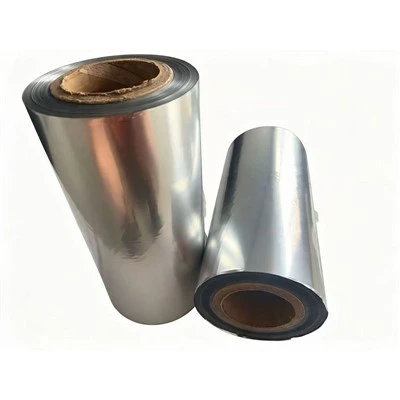
If you’re a printer looking to reduce scrap rates, a brand owner launching a new product that needs sharp, durable packaging, or anyone who relies on CPP film for printing, I’d encourage you to think beyond the basic specs on a datasheet. Printability is a combination of chemistry, manufacturing precision, and attention to detail that turns a plain film into a print-ready material. If you’re ready to test a CPP film that’s optimized for your specific printing needs, don’t hesitate to reach out to us to discuss your requirements and request custom samples. Our team is here to help you get the most consistent, high-quality prints, roll after roll.
Matte CPP Film References
- Han, C. D. (1988). Multiphase Polymers: Science and Engineering. American Chemical Society.
- Khemani, K. V., & Scholz, M. (2007). Surface modification of polyolefins for adhesion and printing. Progress in Organic Coatings, 59(3), 217-225.
- Rosato, D. V., & Rosato, M. G. (2000). Plastics Materials and Processes: A Concise Encyclopedia. Kluwer Academic Publishers.
- Schut, J. H. (2019). Cast polypropylene films: Meeting evolving packaging demands. Plastics Technology.
Qingzhou Huiyuan Packaging Materials Co., Ltd.
As one of the most professional cast polypropylene film suppliers in China since 1997, we’re featured by quality products and good service. Please feel free to buy cheap cast polypropylene film made in China here from our factory. For price consultation, contact us.
Address: Naoshan Industrial Park, Shaozhuang Town, Qingzhou City, Weifang, Shandong Province, China.
E-mail: 15864598133@163.com
WebSite: https://www.huiyuanfilms.com/
