If you’ve ever stood in a job site supply yard walking past pallets of unassuming, heat-shrunk plastic couplings, tees, and end caps, you might’ve overlooked one of the most reliable—yet often misunderstood—parts of modern pipe infrastructure: electrofusion fittings. As someone who’s spent the last decade working alongside crews, engineers, and project managers sourcing these fittings for jobs ranging from small residential sewer lines to municipal water main expansions, I get it. Most people don’t stop to ask how they work, until a bad joint leads to a leak, a delayed project, or a late night on a road repair. Today, I want to break this down like I do when I’m walking a new installer through a job—no confusing jargon, just real, practical science that’s been tested and refined for decades. Electrofusion Fittings
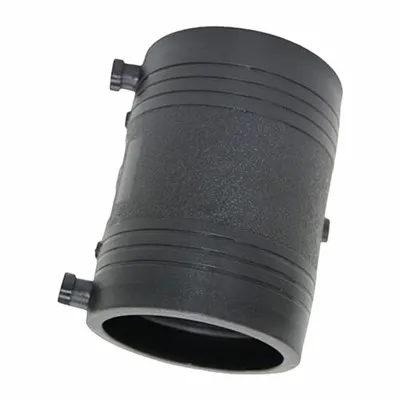
First, let’s set the stage: electrofusion (EF) fittings are not the same as the compression fittings you use for DIY bathroom plumbing, or even the socket fusion tools you’d use for PVC pipe on a residential build. They’re made specifically for polyethylene (PE) pipe, the flexible, corrosion-resistant plastic that’s become the gold standard for water, gas, and wastewater systems because it doesn’t rust, doesn’t crack under pressure from ground movement, and can last 50+ years when installed right. PE pipe comes in rolls for buried lateral lines or rigid straight sections for large mains, and electrofusion fittings are the glue that connects these sections into a continuous, leak-proof line.
The core of how they work all boils down to one simple, controlled process: melting PE resin, under precise heat and pressure, so that the pipe and the fitting merge into one homogeneous piece of plastic—no separate joint, no weak point. But to pull that off, the fitting has to be built with specific, intentional design choices that make that melting predictable and consistent, every single time.
Let’s start with the inside of a brand new electrofusion fitting. If you could cut one open (I’ve done this a hundred times when testing new batches in our warehouse quality lab), you’d see a coil of resistance wire embedded along the entire inner wall of the fitting, wrapped tightly around a hollow center that’s sized to fit exactly over the end of a PE pipe. This wire isn’t just any wire—it’s a high-grade, corrosion-resistant alloy that’s calibrated to heat to a specific temperature: usually around 230°C (445°F), which is the exact melting point of the PE resin used for most standard EF applications. Wrapped around that wire is a layer of insulating plastic, and the entire fitting is molded from the same PE resin as the pipe it’s meant to connect, so when it melts, it’s the same material bonding to itself. That’s key—there’s no foreign material in the joint, which is why it’s stronger than the pipe itself.
Now, the process of joining two pieces with an electrofusion fitting is a step-by-step routine that every certified installer learns by heart, and it’s not something you can rush. Let’s walk through it, because that’s where the science comes alive. First, you prepare the pipe ends: you cut them straight, using a tool called a scriber or a pipe saw, and then you deburr the inside and outside edges to remove any plastic shavings. Any debris, oil, dirt, or even a rough edge will create a gap between the pipe and the fitting wall, and that gap will lead to a weak joint or leak. I’ve seen crews skip this step to save 5 minutes, and it always comes back to bite them a week later when they’re digging up a line to fix a leak.
Next, you slide the prepped pipe ends into the electrofusion fitting until they hit a stop mark inside—most fittings have a small inner ridge that tells you the pipe is inserted to the exact depth, so you don’t have to guess. The fitting is left slightly loose at this point; you don’t want to clamp it yet. That’s because once the fusion cycle starts, the heat from the wire will make both the pipe and the fitting expand a little, and if they’re clamped too tight before the plastic is soft, you’ll squeeze out the molten resin that forms the actual bond.
Then, you connect the two terminals on the fitting to an electrofusion control unit. This is the tool that everyone has come to trust, and it’s not just a power source—it’s a computer. Every EF fitting has a barcode printed on it that corresponds to its specific parameters: how much voltage to use, how long to run the heat, how long to let it cool. That barcode is scanned into the control unit, and the unit does all the work. It sends a precise, low-voltage current through the embedded resistance wire. As the current flows, the wire heats up—rapidly, but uniformly, because it’s coiled evenly around the fitting wall. There’s no hot spot, no cold spot, because the wire is calibrated to heat consistently along its entire length.
As the wire heats, it melts both the inner wall of the fitting and the outer surface of the pipe. A small amount of molten plastic, called “squeeze out,” starts to seep out of the gap between the pipe and the fitting’s outer edge. This is a good thing—it means the plastic is melting, and it’s filling every gap between the two pieces. Too much squeeze out is a sign you ran the cycle too long, or used too much voltage, but a small, even bead around the entire fitting means you’ve got a full, bonded joint.
Once the heat cycle is complete, the control unit automatically cuts the power. Now comes the most critical part: the cool-down phase. You cannot move the joint, apply pressure, or disturb it during this time. For a standard 4-inch EF fitting, that cool-down time might be 15 minutes, but it can be longer for larger sizes or colder weather. During cool-down, the molten plastic that merged from the pipe and the fitting solidifies, creating a molecular bond. The key here is that the cooling is done slowly, under no external pressure, so the molecules of the PE resin have time to interlock and form a single, strong piece of plastic. If you disturb the joint during cool-down, the molecules don’t lock properly, and you’ll end up with a weak joint that can break under pressure.
I know this sounds straightforward, but what makes electrofusion fittings reliable (and why we’ve specialized in them over the years) is that this entire process is repeatable, even for large, complex projects. For example, a municipal water main replacement we worked on last year required over 200 12-inch EF tees, connecting sections of PE pipe that were 1,200 feet long. Each joint was scanned into the control unit, which ensured every heat and cool cycle was identical, no matter who was operating the tool (as long as they were certified). When we pressure-tested the line after completion, there were zero leaks—something that’s almost unheard of with other joint types for that size of pipe.
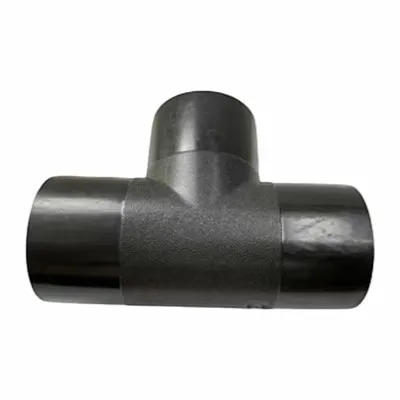
But there’s more to electrofusion than just the basic joint. As a supplier, we offer custom fittings for specific applications, because one size doesn’t fit all. For example, underground gas lines require fittings that are built to hold up to higher pressure, so we have EF fittings with thicker walls and higher-temperature resistance for those projects. For industrial wastewater lines that carry chemicals that could be corrosive, we offer fittings made from PE resin that’s formulated to resist specific chemicals, ensuring the joint doesn’t degrade over time. We also have EF saddles—fittings that tap into an existing pipe to add a new outlet, like a fire hydrant connection—work on the same principle, but have a curved inner wall that fits the contour of the pipe, so the bond is continuous and leak-proof.
A common question I get from new installers is: how does this compare to other fusion methods, like socket fusion? The difference is in the scale and the precision. Socket fusion works well for small, low-pressure pipes, where you can manually align the pipe and fitting and apply uniform heat. But for large pipes, or pipes that need to be installed underground without constant access, electrofusion is better because the control unit does all the heavy lifting—no room for human error in the cycle times, no need for a skilled operator to manually manage heat and pressure. It’s also safer for gas lines, because you don’t have an open flame that could ignite gas fumes near the joint.
Of course, like any technology, electrofusion isn’t infallible. The biggest risks come from improper preparation or rushing the process. I’ve seen joints fail because installers used sandpaper to clean the pipe end (instead of a dedicated pipe cleaning tool that removes the oxidized outer layer of PE) or skipped the cool-down phase to move on to the next fitting. That’s why we don’t just sell fittings—we also provide training for installers, and we work with contractors to audit job sites to make sure the joint process is being done correctly. A bad fitting is a bad joint, no matter how good the product is, and our job as a supplier is to make sure our products are used right.
Another point that’s worth mentioning is quality control. When we manufacture electrofusion fittings, every batch is tested for voltage consistency, wire placement, and fusion strength. We use 100% virgin PE resin, no recycled material, because recycled resin can have inconsistencies in melting point that lead to weak joints. The embedded resistance wire is tested to ensure it doesn’t break during molding, which would lead to a failed fusion cycle. Every fitting is labeled with a unique serial number, so if there’s ever a question about a batch, we can trace it back to the production run and test it ourselves.
At the end of the day, electrofusion fittings work because they turn a two-part connection into a single, continuous piece of pipe. The science is simple: controlled heat melts matching plastic, which cools into a molecular bond that’s stronger than the pipe itself. But the success of that process depends on two things: the quality of the fitting, and the care of the installer. As a supplier, that’s why we focus on both—making fittings that are consistent and reliable, and supporting the people who use them with the training and support they need to do the job right.
If you’re working on a project that requires durable, long-lasting pipe joints, whether it’s a small residential line or a large municipal infrastructure project, we’ve got the electrofusion fittings you need, and the expertise to help you get the job done safely and efficiently. We’re here to answer your questions, provide technical guidance, and help you select the right fittings for your specific application. To learn more about our products and how we can support your project, don’t hesitate to reach out and connect with our team to discuss your procurement needs.
Electrofusion Fittings References
- Polyethylene Electrofusion Fittings: Manufacturing, Testing, and Installation Guidelines. Plastics Pipe Institute, 2021.
- Electrofusion Technology for Polyethylene Pipe Systems. Gas Industry Standards Board, 2019.
- Field Evaluation of Electrofusion Joint Performance for Water Distribution Systems. Journal of Pipeline Systems Engineering and Practice, vol. 12, no. 3, 2021, pp. 1–8.
- Best Practices for Electrofusion Installation in Municipal Infrastructure Projects. American Water Works Association, 2020.
Qingdao Polyfusion Machinery Co., Ltd.
As one of the most professional electrofusion fittings manufacturers and suppliers in China, we have world-leading production equipment and strong manufacturing capabilities. Please feel free to buy bulk high quality electrofusion fittings from our factory.
Address: Chengyang Industry Zone, Chengyang, Qingdao, Shandong, China
E-mail: export01@qdpolyfusion.com
WebSite: https://www.polyfusionfittings.com/
