If you’ve ever worked in industries like chemical processing, food and beverage, water treatment, or pharmaceutical manufacturing, you know how critical accurate level measurement is. A wrong reading on a tank can lead to costly downtime, product waste, or even safety hazards. As a supplier of capacitive level meters, I get asked this question all the time: “Can a capacitive level meter be used in a rectangular tank?” The short answer is yes, but there’s a lot more to it than a simple yes or no. Let’s break down the science, the challenges, and the best practices for using capacitive level meters in rectangular tanks. Capacitive Level Meter
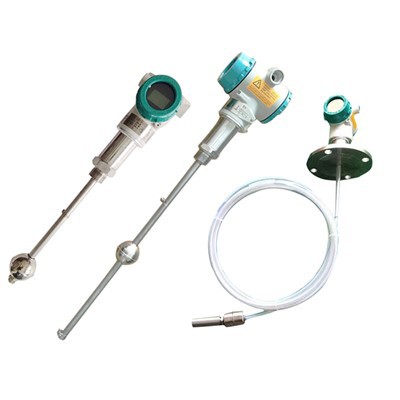
First, let’s refresh what a capacitive level meter is. Unlike float-based or ultrasonic level meters, which rely on physical contact or sound waves, a capacitive level meter works on the principle of capacitance. Capacitance is the ability of two conductors to store an electric charge. In a typical setup, the meter has two electrodes: one is a probe inserted into the tank, and the other is the tank wall (or a separate reference electrode). When the tank is empty, the dielectric material between the electrodes is air, which has a low dielectric constant (around 1.0). When liquid fills the tank, the dielectric constant increases—liquids like water (80) or oil (2.2) have higher dielectric constants than air. The meter detects this change in capacitance and converts it into a level reading.
Now, rectangular tanks are common in many industries. They’re sturdy, easy to manufacture, and maximize space in facilities. But their shape presents some unique challenges compared to cylindrical tanks, which are the most common tank type for level measurement. Cylindrical tanks have a uniform cross-section, so the area between the electrodes is consistent along the height of the tank. Rectangular tanks have flat, straight sides, but the distance between the probe and the tank wall can vary slightly depending on where you install the probe. Wait, no—actually, a rectangular tank has two pairs of parallel walls. If you mount the probe against one wall, the distance between the probe and the opposite wall is fixed, right? But why would that matter for capacitance?
Let’s get into the physics a bit more. The capacitance between two electrodes is calculated by the formula C = ε * A / d, where ε is the dielectric constant of the material between the electrodes, A is the area of the overlapping electrodes, and d is the distance between them. In a cylindrical tank, the probe is usually a central rod, so the distance between the probe and the tank wall is the same all around the probe. That makes the A/d ratio consistent, so the change in capacitance is directly proportional to the level—exactly what you want for accurate measurement.
In a rectangular tank, if you install the probe along the vertical center line, the distance from the probe to the two shorter walls is the same, and to the two longer walls is also the same. That makes the A/d ratio consistent as well, right? But wait, what if the tank has irregularities? Or what if the liquid isn’t uniform—like a slurry with solids settling at the bottom, or a liquid with a varying dielectric constant? Those are the real challenges, not the shape itself.
I’ve seen many customers install capacitive level meters in rectangular tanks and get great results, but I’ve also seen some run into problems. Let’s talk about the mistakes people make. The first one is mounting the probe too close to the tank wall. If the probe is only a few inches from the wall, the A/d ratio changes when the liquid level reaches the wall—because the area of overlapping electrodes is less. For example, if the probe is mounted 6 inches from a wall, the overlapping area when the tank is half full is less than if it were mounted 12 inches away. That can cause the capacitance reading to not linearize correctly, leading to inaccurate level data.
The second mistake is not accounting for the tank’s material. If the rectangular tank is made of a non-conductive material—like fiberglass or plastic—the tank wall can’t act as a reference electrode. You’ll need to install a separate reference electrode inside the tank, usually mounted on the opposite wall or near the top. That adds a bit of installation work, but it’s necessary to get a reliable reading. If you don’t have a reference electrode with a non-conductive tank, the capacitance reading will be based on air and the liquid, but the tank itself won’t contribute to the capacitance, so the meter might not calibrate properly.
Another common issue is with liquids that have a low dielectric constant. Some oils, hydrocarbons, and other process liquids have a dielectric constant close to air. In a rectangular tank, if the probe isn’t long enough, or if the reference electrode is poorly placed, the change in capacitance when the liquid is present might be too small to detect. That’s not specific to rectangular tanks, but the flat sides can amplify the problem because the capacitance change is spread over a larger area. In a cylindrical tank, the probe is surrounded by liquid, so the capacitance change is more concentrated. In a rectangular tank, the liquid is on one side of the probe, so the capacitance change is less. But that’s just a matter of selecting the right probe length and calibration—not a showstopper.
Now, let’s talk about the best practices for installing a capacitive level meter in a rectangular tank. First, choose the right probe length. The probe should be as long as the tank’s height, to cover the entire level range. That ensures you get a full range of capacitance change, which makes calibration easier. Second, mount the probe in the center of the tank, not near the walls. That way, the distance from the probe to all four walls is equal, so the A/d ratio is consistent across the entire height of the tank. If the tank is very large, you might need to use a dual-probe setup, but for most rectangular tanks, a single probe in the center works fine.
Third, if the tank is non-conductive, install a reference electrode. The reference electrode should be mounted vertically, parallel to the main probe, and as far from the main probe as possible. That maximizes the capacitance between the two electrodes, making the reading more sensitive. Some customers use the tank’s manway or another existing metal part as a reference, but that’s not reliable—you need a dedicated electrode to avoid interference.
Fourth, calibrate the meter correctly. Calibration is crucial for any level meter, but especially for capacitive meters in rectangular tanks. Empty the tank, set the meter to the empty value. Fill the tank to the maximum level, set the meter to the full value. If possible, do a mid-point calibration too, to make sure the linearity is correct. I recommend using a process calibrator or following the manufacturer’s calibration guide to get the most accurate results.
Wait, what about foamy liquids? Foam is a common issue in level measurement, and it can affect capacitive meters. Foam has a dielectric constant between air and liquid, so the meter might detect foam as liquid, leading to an overestimation of the level. In a rectangular tank, foam can spread out more on the flat surface, which might make this problem worse. But there are solutions: you can use a special probe with a coating that repels foam, or add a foam suppressor that breaks the foam layer. As a supplier, we often recommend our coated probes for customers dealing with foamy liquids, and it works well in rectangular tanks too.
Let me share a real example from a customer. A few months ago, a food and beverage company reached out to me because they were having trouble with their rectangular storage tanks for fruit juice. They were using ultrasonic level meters, but the foam from the juice was causing the readings to be off by several inches, leading to overfilling and product waste. We suggested a capacitive level meter with a coated probe, and they installed it in the center of their rectangular tanks, with a reference electrode since the tanks were made of stainless steel (so we used the tank wall as the reference). After calibration, their readings were accurate within 0.5 inches, and they haven’t had issues with foam since. They’ve since ordered 12 more meters for their other rectangular tanks.
Another example: a chemical manufacturer with fiberglass rectangular tanks storing mineral oil. The dielectric constant of mineral oil is around 2.2, which is low. They were trying to use a float meter, but the oil was too viscous and the float got stuck. We installed a capacitive probe with a dedicated reference electrode, mounted in the center of the tank. We had to adjust the calibration to account for the low dielectric constant, but once we did, the meter worked perfectly. It detects even small changes in the oil level, and there’s no physical contact, so no sticking issues.
Now, what are the limitations? A capacitive level meter isn’t the right choice for every rectangular tank. If the tank holds liquids that are highly conductive (like concentrated acids or salts), they can coat the probe, leading to a false capacitance reading. That’s called “conductive coating,” and it’s a problem for any capacitive meter, not just those in rectangular tanks. In that case, you might need a different type of meter, like a radar level meter. But if your liquid is non-conductive or slightly conductive (like most oils, juices, or water), a capacitive meter works great.
Another limitation: if the rectangular tank has internal obstructions, like baffles or pipes, they can interfere with the capacitance reading. The probe needs to be installed far enough from any obstructions to avoid signal interference. We usually recommend a minimum distance of 12 inches from any internal parts, but it depends on the size of the tank and the probe.
So, to answer the original question: yes, a capacitive level meter can absolutely be used in a rectangular tank. The key is understanding the shape’s unique characteristics, installing the probe correctly, accounting for the tank’s material, and calibrating properly. The shape of the tank doesn’t prevent a capacitive meter from working—what matters more is the liquid’s dielectric constant, the tank’s construction, and the installation details.
If you’re working with rectangular tanks and considering a capacitive level meter, don’t hesitate to reach out. Our team has experience with a wide range of industries and tank types, and we can help you select the right probe, install it correctly, and calibrate it for your specific application. We’ve helped hundreds of customers solve their level measurement problems, and we can do the same for you.

If you’d like to learn more about how capacitive level meters work in rectangular tanks, or if you’re ready to discuss your application and get a quote, don’t delay. Contact our team today to start the conversation and find the right solution for your facility.
RF Admittance Switch References:
- Li, Y., & Wang, H. (2021). Capacitive Level Measurement for Rectangular Tanks: Effect of Electrode Placement. IEEE Transactions on Industrial Electronics.
- Smith, J. (2019). Level Measurement Technologies: A Guide for Process Industries. Instrumentation Society of America.
- Garcia, M., & Lopez, R. (2020). Challenges of Capacitive Level Meters in Non-Cylindrical Tanks. Journal of Process Measurement and Control.
Shandong Aipuxin Automation Instrument Co., Ltd.
Shandong Aipuxin Automation Instrument Co., Ltd. is one of the most professional capacitive level meter manufacturers and suppliers in China, specialized in providing high quality customized service. We warmly welcome you to wholesale cheap capacitive level meter in stock here from our factory. For price consultation, contact us.
Address: Huigu Phase 1, Zhongnan High-tech Canal New City, Rencheng District, Jining City, Shandong Province
E-mail: aipuxin0124@gmail.com
WebSite: https://www.aipxin.com/
