If you’ve ever wondered how the part that transfers power from your vehicle’s engine to its wheels comes to life, look no further. As a drive shaft supplier with over 15 years in the business, I’ve walked every step of this process countless times, and what most people don’t realize is that a high-quality drive shaft isn’t just a metal tube—it’s a precision-engineered component that balances strength, weight, and durability. Let me break down exactly what goes into making one, from raw material to the finished part that powers trucks, cars, and industrial machinery around the world. Drive Shaft
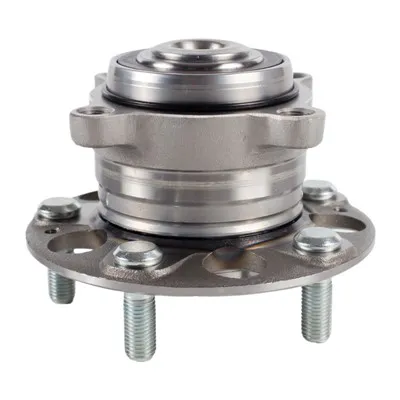
It all starts with choosing the right raw material, because cutting corners here leads to parts that fail early. We don’t use just any steel; the foundation of every drive shaft is typically high-strength carbon steel, alloy steel, or sometimes lightweight aluminum for performance vehicles. Carbon steel is ideal for heavy-duty applications like pickup trucks and semi-trucks because it can handle massive torque loads without bending. Alloy steel, which adds elements like chromium or molybdenum, offers even higher tensile strength for industrial equipment that works around the clock. Aluminum, on the other hand, cuts down overall weight—something critical for race cars where every extra pound hurts acceleration and fuel efficiency. Before we even cut a single piece of metal, every batch is tested for chemical composition and hardness, because a 1% difference in carbon content can make a part either reliable or a safety hazard.
Next comes the raw material preparation stage. For steel, we start with round bar stock, which we cut to the exact length required for the drive shaft’s main tube. If we’re making a tube from a solid bar, we use a process called seamless tube extrusion, where the bar is heated to thousands of degrees until it’s malleable, then pushed over a mandrel to hollow it out into a long, smooth tube. This is far stronger than a welded tube, because there’s no weak seam that can split under stress. For aluminum, we use extrusion presses that force heated aluminum billets through a die shaped like a tube, resulting in a lightweight, uniform profile. After cutting, all tubes go through a deburring process to remove sharp edges left by the saw, because even a tiny burr can cause imbalance later on.
Once we have the raw tube, we move to the next key step: precision machining. The ends of the drive shaft need to connect to other parts of the vehicle or machine—like the transmission output flange and the differential input yoke—so these ends have to be shaped with extreme accuracy. We use computer numerical control (CNC) lathes to turn the ends of the tube, cutting threads, flanges, and mounting holes to tolerances of less than 0.005 inches. That’s thinner than a human hair, and it’s non-negotiable; if the end is even slightly off, the drive shaft will vibrate at high speeds, leading to premature wear on bearings and even catastrophic failure. For heavy-duty drive shafts, we also machine the center section to add u-joint caps—these are the flexible couplings that allow the drive shaft to bend as the vehicle drives over bumps, a detail that most drivers never notice but is absolutely essential for smooth operation.
After machining comes balancing, a step that separates mass-produced parts from ones that last. A drive shaft spinning at 60 miles per hour (which translates to over 1,000 rotations per minute for typical passenger vehicles) has to be perfectly balanced—even a 1-ounce weight difference on one side will cause vibrations that can be felt through the steering wheel, and over time, those vibrations can break mountings, damage transmissions, or make the vehicle unsafe. To balance a drive shaft, we spin it on a specialized machine that measures any imbalance, then mark where extra material needs to be removed or small counterweights added. For high-performance or heavy-duty applications, we do this dynamic balancing, which accounts for the drive shaft spinning and moving as it would in use, not just sitting still. Every single drive shaft leaves our facility with a balance rating of G2.5 or better, a standard that’s recognized as industry-leading for smooth operation.
Next, we add the critical components that make the drive shaft functional: universal joints (u-joints), center bearings (for longer drive shafts), and slip yokes. U-joints are the small cross-shaped assemblies that connect the ends of the drive shaft to the flanges, allowing for angular movement. We assemble them by hand in our facility, because precision is key here—each bearing cap is pressed into place with a hydraulic press to ensure a tight fit, and we grease every u-joint to reduce friction and wear. For drive shafts longer than 60 inches, like those on semi-trucks or buses, we add a center support bearing in the middle of the shaft to prevent sagging under its own weight, which would cause vibration. The slip yoke is another important part—it allows the drive shaft to change length slightly as the vehicle’s suspension moves up and down, so it doesn’t bind when going over bumps. All of these components are rigorously tested before installation to make sure they can handle thousands of miles of use without failing.
Once all the components are in place, we move to surface treatment and coating, which protects the drive shaft from rust and corrosion. Even a small rust spot can weaken the metal over time, especially for drive shafts on vehicles that drive in snowy, salted conditions or work in outdoor industrial environments. We offer two main coatings: powder coating for lighter-duty applications, which is a durable, environmentally friendly finish that comes in a range of colors, and zinc plating for heavy-duty parts, which provides superior corrosion resistance. For extreme industrial use, we also offer a ceramic coating that can withstand high temperatures and harsh chemicals, perfect for off-road equipment or mining machinery. Before coating, every drive shaft is cleaned and pretreated to remove oil and grease, ensuring the coating adheres properly.
Finally, every drive shaft goes through a final quality inspection and testing before it leaves our facility. This isn’t just a quick visual check—we run a series of tests to make sure it can perform under real-world conditions. First, we do a visual inspection to check for any machining defects or coating flaws. Then, we test the balance again to confirm it still meets our standards. For heavy-duty parts, we perform torque testing, applying up to 150% of the maximum torque the drive shaft will ever encounter to make sure it doesn’t bend or break. We also do a flex test, moving the u-joints through their full range of motion hundreds of times to ensure they don’t bind or wear out. Only drive shafts that pass all these tests get a stamp of approval and are ready for delivery.
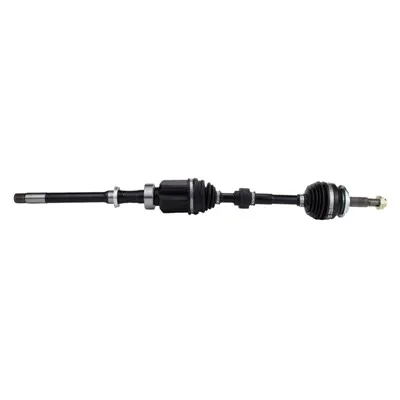
Over the years, I’ve seen what happens when a drive shaft is made with shortcuts: vehicles breaking down on the side of the road, industrial machinery shutting down at the worst possible time, even safety hazards on the road. That’s why, as a drive shaft supplier, we don’t cut corners at any step of the process. Every part we make is built to last, with attention to detail that comes from decades in this industry. If you’re looking for a reliable, custom drive shaft for your vehicles or machinery, we’re here to help. Get in touch with our team to discuss your specific needs, and we’ll work with you to design and manufacture a drive shaft that fits your application perfectly.
Drive Shaft References
- American Society of Mechanical Engineers. (2020). Automotive Drive Shaft Design and Manufacturing Standards.
- Society of Automotive Engineers International. (2021). Heavy-Duty Drivetrain Component Performance Guidelines.
- Metal Manufacturing and Services Association. (2019). Seamless Tube Extrusion Process and Material Specifications.
- Balancing Machinery Manufacturers Association. (2022). Dynamic Balancing Standards for Rotating Industrial Components.
- Corrosion Protection Association. (2020). Industrial Coating Specifications for Drive Shafts in Agricultural and Off-Highway Equipment.
Guangzhou Pinxiu Auto Parts Co., Ltd.
As one of the most professional drive shaft manufacturers and suppliers in China, we warmly welcome you to buy durable drive shaft for sale here from our factory. All customized products are with high quality and competitive price. Contact us for pricelist.
Address:
E-mail: pinxiu@cclparts.com
WebSite: https://www.cclauto-parts.com/
