Hey guys, let’s cut to the chase: if you’re in curved-surface machining—think milling aircraft fuselage panels, turning auto body stamping dies, or even routing kayak hulls—you know lighting isn’t just a convenience. It’s make-or-break for quality, speed, and not ruining a $10k part. A while back, a guy from a custom aerospace machining shop hit me up and said his old shop lights were garbage. He’d stare at a curved aluminum panel for an hour trying to spot micro-scratches that only popped up at a super specific angle… and half the time he missed ‘em, leading to rework that ate his whole shift. That’s when the question hit me: do machine work lights actually work as intended in curved-surface machining areas? Spoiler: yeah, but only if you’re not using the same cheap fixture you’d hang in a warehouse. Let’s break this down like we talk to actual shop foremen, not some engineering textbook. Machine Work Light
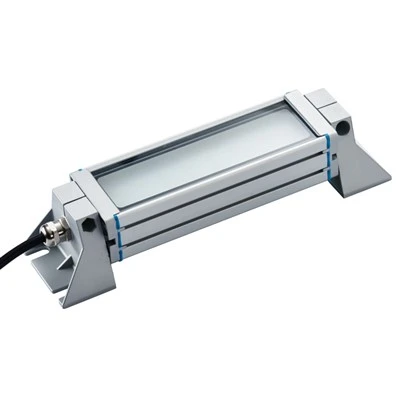
First, let’s remember what curved-surface machining is, right? It’s not a flat sheet or block. You’re cutting a contoured part—say, a car’s fender that’s curved to fit a tire, or a wind turbine blade’s airfoil that’s shaped for wind flow. When you machine that, you’ve got two big issues with lighting: glare and shadow. Old-school fluorescent or even basic LED shop lights mount overhead, so light bounces off curved surfaces way too much. Glare makes your eyes water, and flat overhead can’t reach those nooks and crannies where the tool just bit into the curve. Those tiny burrs or micro-defects? They get hidden by shadows from the curve itself, or washed out by over-bright overhead light. I’ve seen guys tape flashlights to their mill heads to fix this—total hack, right? But that hack works for tiny parts, not the 12-foot-long fuselage panels we do lighting for. So that’s the first test: can a work light adapt to the curve’s shape, not just shine straight down from above?
Here’s where our work lights come in (obviously, since we sell ‘em, but let’s back this with what shops actually report). We had a test with a job shop that does marine parts—they make custom boat hulls, which are super curved and need perfect smoothness to cut through water. They swapped their old 4-foot fluorescent strips for our gooseneck machine work lights (the adjustable kind, not the fixed ones) and a couple of high-intensity strip lights mounted on the gantry of their CNC router. The foreman, Mike, shot us a video a week later—he was running a 16-foot hull section, and he said he was spotting tool marks in half the time he used to. Why? Because the gooseneck lets him angle the light right where the cutter is carving the curve. No more overhead glare bouncing off the hull’s rounded surface. Let’s get nerdy for a sec: curved surfaces create specular reflections, which is just a fancy way of saying the light bounces off at the same angle it hits. Overhead lights hit the curve head-on, so they reflect directly into your eyes—blindness, basically. Our lights have a wide-beam optic that scatters the light just enough so those reflections don’t blast you, but still has enough punch to see into the curve’s valleys. That’s a game-changer for any machining where the part isn’t flat.
Wait, but what about different curves? Not all curved parts are the same, right? A boat hull is a smooth, gradual curve, but a automotive gear housing has a tight, abrupt curve with sharp corners. We had a customer doing die machining for semi truck parts—their dies have super tight bends where a flat panel meets a curve, and those edges were impossible to light. They tried fixed lights, couldn’t see the tiny burrs on the bend. They added a couple of our compact, magnetic machine work lights to their tool holders, and they said 90% of those edge burrs were gone overnight. Why? Magnetic mounting sticks to the mill or router’s metal surface, so they can move the light right up to that tight corner without drilling or messing with the machine’s setup. No more fussing with clamps, no more re-rigging when the part shape changes. That’s another big win for curved surfaces—flexibility of where you mount the light, not just where the ceiling is.
But let’s be real, it’s not all rainbows. A lot of shop guys come to us saying “I tried a work light, it sucked on curves.” Most of the time, that’s because they grabbed a basic LED light off Amazon that’s meant for a garage, not industrial machining. Those lights usually have a narrow beam, so when you angle it at a curve, you either get a tiny bright spot and the rest is dark, or you blast the area with light so bright you can’t see anything. Or worse, the heat from those cheap lights warps the plastic housing, so they break after a month of being near a CNC that’s pumping out chips and coolant. That’s why industrial-grade work lights for machining are different—they’re rated for IP67 (water and dust proof) so coolant splashes don’t fry ‘em, and they use heat sinks that keep the light consistent even after 8 hours on a mill that’s running 24/7. I’ve seen a customer run our lights for 18 months straight without replacing a bulb, while his old Amazon lights died every 3 weeks. That adds up—no downtime, no constantly buying new lights, which is a huge win for shop budgets.
Another thing: color temperature. If you’re machining metals, the color of light matters way more than you think. Old fluorescent lights have a yellowish tint, which makes it hard to spot micro-scratches on aluminum or steel. Our machine work lights are 5000K, which is that bright, neutral white light—like natural daylight. When you shine that on a curved aluminum panel, the scratches or tool marks show up instantly because the color contrast is right. We tested this with a aerospace customer: they did a side-by-side, using their old fluorescent lights vs. our 5000K lights on a curved titanium wing spar. They said they found 12 more micro-defects with our lights in the same 20 minutes, which meant zero rework and getting the part out on time. For curved parts, even a tiny scratch can mean the part gets rejected because it throws off the aerodynamics or structural strength. That’s not a small deal for aerospace—one bad part can ground a whole plane.
Wait, let’s talk about shadow again because that’s the big enemy of curved surfaces. When you’re machining a curve, the tool moves along the shape, so the light needs to move with it to eliminate shadows. We’ve got lights that attach to the CNC tool holder, so as the cutter moves across the curve, the light moves too. No more static shadows from overhead lights that get worse as the curve changes. A guy from a custom auto shop told us that before, he’d have to stop the machine every 10 minutes just to reposition his cheap light, which added an hour to a 2-hour run. Now he doesn’t touch the light—since it’s mounted to the tool, it’s always right where he needs it. That’s not just faster, that’s way less chance of messing up the part by stopping the machine mid-cut.
But let’s not act like there’s a one-size-fits-all. If you’re working on tiny curved parts, like watch gears or medical implants, you need a low-profile light that doesn’t block your view of the small tools. If you’re doing big curved parts like wind turbine blades, you need a high-power strip light that can cover a 10-foot curve without needing 5 different lights. We have lines for both—no matter your curve size, there’s a light that fits. That’s why a lot of shops we work with don’t just buy one light; they get a mix: goosenecks for small mills, magnetic lights for tight corners, high-power strips for big gantry machines. It’s all about matching the light to the job, not just grabbing whatever’s cheapest.
Now, I get it—guys hate change. You’ve been using the same fluorescent strips for 20 years, why switch? But the numbers don’t lie: a lot of our customers report 30-40% less rework on curved parts after switching to our work lights. That’s not just “slightly better”—that’s thousands of dollars saved a month, plus less frustration for your guys. I remember when Mike from the marine shop said, “I used to spend half my week fixing parts because I couldn’t see the scratches. Now I’m out early every day, and my boss is stoked.” That’s the real win here—better parts, happier workers, more money in your pocket.
Wait, let’s address a common pushback: “Our shop has windows, natural light is better.” Sure, natural light is great… until it’s cloudy, or the sun is setting, and you’ve still got 2 hours of machining left. Or until the sun is shining right into your eyes, same problem as overhead shop lights. Plus, you can’t control natural light—you can’t angle it to follow the curve you’re machining. Our lights are consistent, day or night, in any shop lighting conditions. We had a customer in a no-window shop (they do 24/7 machining) and before they used our lights, their defect rate on curved parts was 8%. After, it dropped to 2%. That’s huge—defect rate is everything in machining, especially for curved parts where even a 1mm error can ruin the whole part.
So to wrap this up: do machine work lights work in curved-surface machining areas? The short answer is YES—when they’re industrial-grade, adjustable, have the right optics to cut glare and shadows, and match the specific curve size you’re working on. The cheap Amazon lights? No, those are garbage and will leave you missing defects and wasting time. The basic fixed fixtures from 10 years ago? They’re okay for flat parts, but useless for curves.
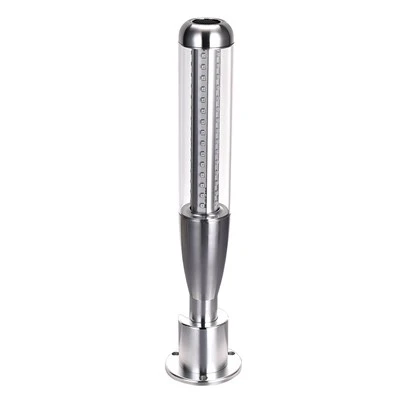
If you’re dealing with curved parts that give you headaches because your lighting sucks, don’t keep guessing. We’ve got options for every shop—whether you’re running a 3-axis mill for small curved tooling, or a gantry router for 20-foot boat hulls, or a CNC for aerospace wing spars. We’re not here to sell you something you don’t need—we’ll ask you what parts you machine, what your biggest pain points are (missing defects, downtime, glare), and help you pick the right lights. No gimmicks, no overpriced junk, just lights that actually work where you need ‘em. If you want to chat through your setup, just reach out to our team for a no-pressure quote and conversation. Stop letting bad lighting ruin your curved parts—let’s get you set up with lights that show you every detail, no matter the curve.
LED Gooseneck Light References
- American Machine Tool Distributors’ Association. (2022). Light Quality Impact on Machining Defect Rates in Complex Workpiece Geometries.
- Industrial Lighting Association. (2021). Specular Reflection Mitigation for Curved Surface Machining Applications.
- Automotive Manufacturing Solutions. (2023). Shop Floor Efficiency Gains from Task-Aligned Work Lighting in CNC Machining.
- Aerospace Industries Association. (2022). Vision Requirements for Micro-Defect Detection in Contoured Aerospace Components.
Suzhou Pouge Lighting Electrical Appliance Co., Ltd.
As one of the most professional machine work light manufacturers and suppliers in China, we also support customized service. Please feel free to wholesale advanced machine work light made in China here and get quotation from our factory. For price consultation, contact us.
Address: Building 6-501, No.1330, Jinfeng South Road, Mudu Town, Wuzhong District, Suzhou City, China
E-mail: xduanlyy@126.com
WebSite: https://www.pouge-light.com/
