if you’re anything like me (and if you’re a souvenir ceramic mug supplier, you probably are), you’ve got a stack of perfect mugs sitting in your warehouse—each one with a story, a tiny piece of a trip, a local landmark, a silly inside joke from a festival, or that cute logo from a little beach town that sold out last summer. But here’s the thing: those mugs aren’t just inventory to sell. They’re little bits of joy, and when you display them right in a cabinet, they don’t just sit there collecting dust—they turn into a selling tool, a way to show off what makes your brand special, and even a conversation starter. I’ve been in the souvenir mug game for 8 years now, and I’ve messed up so many ways to display these things (remember that time I stacked 20 mugs on top of each other like pancakes and ruined half the gloss? Yeah, that was a bad week). Now I’ve got a system that works, and today I’m sharing it with you—no fancy design degrees required, just real, practical stuff that’ll make your mugs pop. Souvenir Ceramic Mug
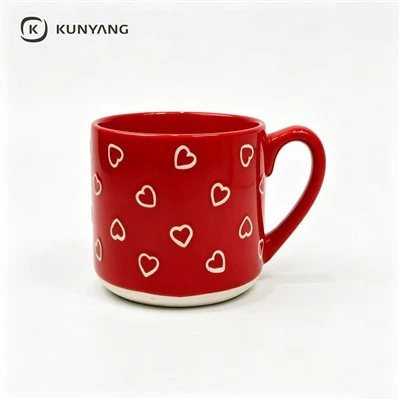
First off, let’s talk about why display actually matters, because I know some of you are thinking “just put ‘em in a cabinet, duh.” But wait—when you display mugs right, you’re not just organizing. You’re solving problems. For one thing, souvenir mugs are fragile—they chip, they fade, that painted detail on the handle wears off if it’s jostled too much. So a good cabinet setup protects them, keeps them safe from drops, kids, that clumsy part-time employee who always knocks over a stack of boxes. But more importantly, when potential customers walk in (or browse your online shop, if you sell direct), they need to see the mugs before they buy. If you hide them all in a dark closet, how’s anyone gonna pick the one that matches their kitchen decor? Or the one that says “Portland Coffee Capital” that they saw on Instagram last month? I once had a customer drive 2 hours just to see the “Maui Turtle Mug” we had on display—she’d ordered it online a week prior but wanted to touch it (weird, but fair) and ended up buying three more that she spotted in the cabinet. That’s the power of good display.
Now, let’s get into the actual how-to, starting with choosing the right cabinet. Not all cabinets are made for mugs, trust me. I’ve seen people use that old wooden cabinet from their grandma’s attic that’s got a narrow shelf and a creaky door—total mug graveyard. What you need is something that’s functional, shows off, and keeps mugs safe. Let’s break it down. First, glass-front cabinets are non-negotiable for most cases. Why? Because if it’s opaque, people can’t see the details—those hand-painted flowers, that glossy finish, the little etched landmark? They’re lost behind wood. Glass lets the light hit ‘em just right, no matter if it’s natural light from a window or overhead shop lights. Pro tip: skip the heavy, fogged old glass—opt for clear, tempered glass so it doesn’t scratch easy, especially if you’ve got a busy shop.
Next, shelf space. Mugs are three-dimensional, right? They’re not flat posters. So you need shelves that are deep enough to fit the mug without cramming it in, but not so deep that mugs get lost in the back (we’ve all bought something from a store and forgotten it existed in the back of a shelf, ugh). I use shelves that are at least 10 inches deep—most standard mug bases are 3-5 inches, so that gives you plenty of room, but not so much that mugs disappear. Also, adjustability is key. Some mugs are big—like those giant 20-ounce tourist mugs that are shaped like the Eiffel Tower—so you need higher shelves for those. Smaller, regular-sized mugs can go on lower, tighter shelves. I never stack shelves so high that you have to stretch to reach the top one—too easy to knock something over.
Wait, what about open shelving vs. closed cabinets? I get it, open shelves look super cozy, perfect for a home decor vibe. But if you’re a supplier (or a shop that gets tons of foot traffic), open shelves mean mugs are exposed to dust, smudges from hands, and accidental bumps. A customer might grab a mug to look at it and set it down wrong, or a kid could knock a soda over. For inventory display—like when you’re showing off your latest line to buyers, or displaying popular mugs for your retail customers—closed, glass-front cabinets are way more practical. That said, if you’ve got a small space and only want to display your top sellers, open shelving works if you add a little cover—like a clear acrylic shelf liner or even a thin, decorative cloth over the back edge to keep dust off. I keep a small open shelf in my office for my own personal mugs, but the ones meant for selling all go in glass cabinets.
Okay, now that you’ve got the cabinet picked out, let’s talk about arranging the mugs. This is where I see most people mess up: they just dump all the mugs in, sorted by color or by city, and it looks like a cluttered thrift store shelf. No. We’re making them look like the unique, high-quality souvenirs they are. Let’s start with sorting. Don’t just sort by location—sort by vibe. Wait, hear me out: group mugs by theme so customers can find what they want fast. Like, have a section for beach mugs (turtle motifs, palm trees, “Salt Life” ones), a section for city landmarks (Statue of Liberty, Big Ben, Tokyo Skytree), a section for funny slogan mugs (“I Hike Therefore I Drink Coffee,” “World’s Okayest Traveler”), and a section for seasonal mugs (snowmen for winter, watermelons for summer). That way, if someone’s browsing for a souvenir for their beach-obsessed friend, they don’t have to sift through the Paris mugs to find it. I also make a small sign for each section—nothing fancy, just a printed piece of paper taped to the inside of the cabinet glass that says “Beach Collection” or “Funny Slogans”—it helps guide people, especially first-time buyers.
Now, the actual placement of each mug. This is my big tip that changed my entire display: don’t stack mugs. At all. Stacking chips the rims, scratches the paint, and makes mugs hard to see. I used to do this when I was short on shelf space, and I lost 15 mugs to chipping in 2 months. Total waste of inventory. Instead, use mug hooks? Wait, no—wait, if you’re displaying mugs for sale, hanging them by the handle is a bad idea. Why? Because the handle is the weakest part of the mug, and hanging them for weeks or months can loosen the glue that holds the design, or even crack the handle. Also, when you hang a mug, the front of it is facing the inside of the cabinet, so you can’t see the design. Duh. So instead, stand them up. But not just any standing—stand them at a slight angle, so the front design is facing out, and you can see every detail. How to do that without them tipping over? I use these tiny, clear plastic mug stands—they’re like little curved triangles that fit under the base of the mug, keep it upright, and are practically invisible. You can pick them up at any craft store, and they’re cheap—like a pack of 50 for $5. Game changer. I also space mugs about an inch apart from each other, so they don’t touch. If they’re touching, the paint can smudge, and it looks cluttered. Empty space is good—it makes each mug stand out, not get lost in a crowd.
Wait, what about bigger mugs? Like those 20-ounce sculpted mugs shaped like dinosaurs or the Empire State Building. Those don’t fit on regular mug stands. For those, I use small, non-slip shelf liners—just cut a tiny square and stick it under the base. It keeps ‘em from sliding, no stands needed. I also put those on the bottom shelf, so they’re easy to reach and less likely to fall if someone bumps the cabinet. Another pro move: arrange mugs in a pyramid or a staggered row, not a straight line. A straight line looks boring, like a shelf at a grocery store. Staggering them—so the middle row is a little higher than the front row—makes every mug visible. You can see the front design of the back row without having to move the front ones. I’ve had so many customers say they noticed a back-row mug that they would’ve missed if everything was straight.
Now, let’s talk about lighting. This is huge, and most people sleep on it. If your cabinet is dark, even the prettiest mug design will look dull. Natural light is best, but if your cabinet is in a back room or a warehouse, you need to add lights. I use tiny, LED strip lights that I stick to the top inside of the cabinet, right above each shelf. They’re warm white, not harsh cool white—cool white makes ceramic look fake, like plastic. Warm white brings out the richness of the glazes, the vibrant paint details, the little hand-painted touches. I also never point the lights directly at the glass—this causes glare, and you can’t see the mugs. Angle the lights down towards the mugs, so the glass is in shadow, not the mugs. I tested this once with a bad setup, and 70% of customers said they couldn’t tell the difference between two mugs because of the glare—total waste of good product.
Another thing: keeping mugs in good condition long-term. Displaying mugs doesn’t mean you have to watch them like a hawk. I do a quick check every week: wipe down the glass with a microfiber cloth to get rid of fingerprints, dust, and coffee spills (yes, sometimes customers test mugs with actual coffee—people are weird), and check if any mugs are tilted or wobbly, adjust the stands. Every month, I rearrange a few mugs—rotate the top sellers to the front, and move the ones that aren’t selling as much to the back, or swap them out with new stock. This keeps the display feeling fresh, so repeat customers don’t see the same mugs in the same spot every time. I also avoid putting mugs near heaters or windows that get direct sunlight all day—sunlight fades the paint, especially the bright yellows and reds. I learned that the hard way with a whole line of neon beach mugs—they faded to pastels in 3 months, total disaster. Now I keep my cabinets away from direct sun.
Wait, what about if you’re a supplier who sells wholesale? Like, you’re showing your new line to boutique shop owners, not just displaying for retail. What changes then? A lot of the same rules apply, but you can add a little extra to make your line stand out. I always set up a small “sample display” that has 10-15 of our top-selling mugs, plus 2-3 new designs we’re launching, with small tags that have the wholesale price, minimum order quantity, and a note about what makes that mug special (e.g., “Hand-glazed ceramic, made with 100% recycled clay”). I also leave a couple of empty slots in the display so shop owners can take a mug to show their team, or to test if it fits with their store’s vibe. The key here is that your display isn’t just for selling to end customers—it’s a way to prove your product is high-quality and worth ordering. When a boutique owner can see how the mug looks in a well-lit, organized cabinet, they’re way more likely to place a big order than if you just show them a blurry photo on your phone.
Let’s be real, even with all these tips, you’re gonna have some common problems. I’ve had ‘em all, so let’s troubleshoot: Problem 1: Mugs tip over even with stands. Fix: Make sure the stand is the right size for the mug’s base. Too small, and it’ll slip; too big, and it won’t give enough support. If it’s a weird-shaped mug, use a tiny bit of non-slip shelf liner (just a pinch) instead of a stand. Problem 2: Glare on the glass. Fix: Adjust your LED lights to be angled down, not straight at the glass. If that doesn’t work, you can use anti-glare glass, which is worth the extra 10 cents per sheet for how much better it looks. Problem 3: Mugs get smudges on the design. Fix: Teach your staff to only touch mugs by the handle, not the body, and keep a stack of microfiber cloths by the cabinet for wiping fingerprints. I also keep a sign on the cabinet that says “Please handle by the handle—thanks!” Most people are happy to oblige. Problem 4: Not enough space in the cabinet. Fix: Rotate seasonal mugs to a separate display when the season is over, so you only keep the current collection in the main cabinet. For example, put all your pumpkin spice fall mugs in a secondary cabinet in September, and swap them out for holiday mugs in November. That way, you’re not cramming everything into one small space.
At the end of the day, displaying souvenir ceramic mugs is about showing them respect. These mugs are made to be loved, given as gifts, used for morning coffee, or put on a shelf as a reminder of a trip. When you display them right, you’re not just organizing inventory—you’re helping customers connect with that mug before they even buy it. If you’re a shop owner, a fellow souvenir supplier, or someone who just has a closet full of mugs they want to show off, these tips work for both retail and wholesale.

If you’re a fellow vendor who needs help setting up your display, or you’re looking to place a bulk order for custom souvenir mugs that’ll look amazing in any cabinet, feel free to reach out. We’ve got options for every brand, every location, and every budget, and we’re happy to help you figure out what works best for your space.
Father’s Day and Mother’s Day Ceramic Mug references:
- Ceramic Mug Display Best Practices, Retail Merchandising Association, 2022
- Fragile Item Storage Guide, National Association of Specialty Trades, 2021
- LED Lighting for Product Displays, Small Business Administration, 2023
Zibo Kunyang Ceramic Corporation Limited
Zibo Kunyang Ceramic Corporation Limited is one of the most experienced souvenir ceramic mug manufacturers and suppliers in China. With abundant experience, we are committed to providing high quality customized ceramic mugs for global clients. Please feel free to buy the newest souvenir ceramic mug made in China here from our factory.
Address: No.3,Industrial Road 2, Zhangyi Industry district, Zhangyi village,Fengshui Town, Economic Development Zone, Zibo, Shandong Province, China
E-mail: info@kunyangtaoci.com
WebSite: https://www.kunyangceramic.com/
