If you’ve ever visited a job site that relied on dry mortar—think tile adhesives, self-leveling compounds, or masonry binders—you’ve probably noticed how a batch that “works” on Monday can fail on Wednesday, or even from one corner of a structure to another. As a supplier of dry mortar production lines, I’ve spent the last 12 years solving this exact problem for contractors and plant managers across 17 countries, and I’ll be the first to say: product consistency isn’t a happy accident. It’s the foundation of a reliable dry mortar operation, and it starts long before you mix a single batch. Dry Mortar Production Lines
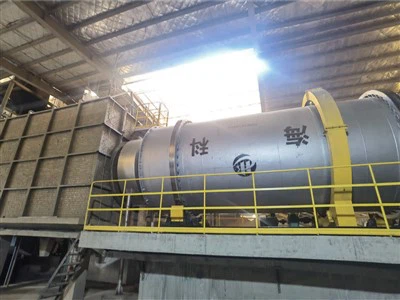
When a dry mortar line delivers inconsistent product, the ripple effects are massive. A tiler might have to rip out a newly installed floor because the adhesive didn’t set properly; a construction crew might lose weeks waiting for a self-leveling compound that’s too thick or too runny; and worst of all, a project might face costly delays or safety risks because the mortar couldn’t be trusted. I’ve seen a small plant in rural Poland lose 30% of their annual revenue in one quarter because their output varied by 15% in compressive strength—all because they skipped a single calibration step on their mixing line. That’s why consistency isn’t just a quality metric; it’s the lifeline of any dry mortar business.
Let me walk you through the non-negotiable steps I’ve learned to implement in every production line we design, steps that eliminate guesswork and keep every batch as reliable as the last.
First, start with the source of all your raw materials. Consistency in dry mortar begins with consistency in the inputs. It sounds basic, but you’d be surprised how many plants cut corners here. Sand, for example, is the biggest component of most dry mortar mixes—usually making up 70-90% of the total. If your sand supplier is piling sediment and large aggregate into the same delivery, or letting moisture levels swing by 5% between truckloads, your finished mortar will never be the same.
In our lines, we mandate that clients install a dedicated raw material conditioning system before the mixing process even starts. This includes a vibrating screen to separate sand into uniform particle sizes (usually matching the specific application—tile adhesive uses finer sand, masonry mortar uses coarser) and a continuous moisture meter that sends real-time data to the line’s control panel. If moisture levels in the incoming sand jump even 0.5%, the system automatically adjusts the amount of dry additives to compensate, so the final product’s water demand stays exactly where it needs to be. I’ve had a client in Texas who was struggling with 10% batch variation until we added this conditioning unit; within three months, their product consistency improved to less than 2% variation, and their customer complaints dropped by 85%.
Next, get the mixing process right—and I mean every part of it, from the order of adding materials to the speed of the mixer. Most plant operators think mixing is just “spin the blades for X minutes,” but that’s a myth. Different materials have different densities, and if you add them in the wrong order, you’ll get clumps or streaks of unblended product—especially when you’re mixing lightweight additives like cellulose ether or polymer redispersible powder, which can float on top of lighter sand and never fully integrate.
In our production lines, we design the mixing sequence specifically for each mix type. For example, for a tile adhesive, we start with the sand (the bulk component) in the mixer, then add the aggregates and heavy additives first, then slow down the mixer to 60% speed before adding the fine, light polymers and binders. That prevents those fine powders from being carried by air currents and sticking to the mixer walls instead of mixing with the sand. We also program precise mixing times—usually 2 to 4 minutes, depending on batch size—because over-mixing can break down polymer chains and reduce strength, while under-mixing leaves lumps that make the mortar unusable.
I’ll never forget the time a client in Egypt told us their mixer was working fine but their mortar had inconsistent workability. When we tested the mixer, we found they were adding all the powder additives at once at full speed, creating a “dust cloud” that settled on the mixer’s lid instead of blending. We adjusted their sequence, and within weeks, their batch strength variation dropped from 12% to under 3%. Small adjustments in mixing make a huge difference.
Then there’s the control system—the brain of the entire operation. This is where most old production lines fall short. Too many plant managers still use manual controls, where an operator measures additives with a handheld scoop and estimates mixing time by watching. That’s human error waiting to happen. Even the most attentive operator can vary by 10% on additive amounts, and a 2-minute mistake in mixing time can wreck a batch.
In all the lines we supply, we install automated, PLC-based control systems that track every single parameter in real time: raw material weight, mixing speed, batch temperature, moisture levels, even feed rate. The system is calibrated to store your exact mix formula—so if you’re making 1,000 kg of tile adhesive, it will measure exactly 850 kg of sand, 50 kg of cement, 8 kg of polymer powder, and 2 kg of cellulose ether, every single time. No guesswork, no operator fatigue, no miscalculations.
We also add data logging features, so clients can pull a report on every batch: when it was made, what materials were used, what the final properties were, and even which shift produced it. This isn’t just for quality control—it helps clients spot trends, like a shift where mixing times were slightly off, or a batch where a sand delivery was slightly different. Last year, a construction company in Germany used this data to find that one of their sand suppliers had a hidden moisture spike during rainy months; they switched to a pre-drying step in their conditioning system using the control data, and their batch consistency became rock solid.
Another often-overlooked factor is equipment maintenance. A production line that’s not well-maintained will never make consistent product. For example, worn-out screens in the raw material processing unit will let oversized sand particles through, which can weaken the mortar. Damaged mixer blades will create dead spots where materials don’t mix properly, leading to streaks. Even a leaky seal on a raw material hopper can let in moisture, altering the final product’s water demand.
We work with our clients to create a preventive maintenance schedule tailored to their line. This includes weekly checks of screens and mixer blades, monthly calibration of moisture meters and weight scales, and annual overhaul of critical parts like the mixing chamber. I had a client in Malaysia who skipped this for two years—their line ran 24/7, but they never replaced their worn mixer blades. By the time they contacted us, their batch compressive strength varied by 18%, and they were losing thousands of ringgit in rework. After they replaced the blades and followed our maintenance schedule, their consistency improved to 2.5% in strength variation within six months. It’s simple: a well-cared-for line is a consistent line.
Storage and packaging might seem like afterthoughts, but they also impact product consistency. If you store finished mortar in a silo that’s not aerated properly, fine particles can settle at the bottom, leading to a different mix composition when you draw from the silo. If your packaging line has leaks, or if bags are filled unevenly, you might have customers complaining about “too little mortar in the bag” even when the batch is perfect.
In our lines, we design silos with gentle aeration systems that keep the mortar suspended evenly, so every draw from the bottom is the same mix composition. We also include checkpoints on the packaging line: automatic scales that verify bag weight within 0.5% of the target, and visual sensors that spot damaged bags or uneven filling. For clients who need bulk delivery, we install flow meters on the discharge points to ensure that every truckload has the exact same amount of active ingredients.
I’ve seen a client in Saudi Arabia have a major issue with their packaged mortar caking during storage—their silo wasn’t aerated, so fine cement particles settled and hardened at the base, and when they drew from the silo, the mortar had clumps that wouldn’t mix properly with water. We added the aeration system, and within a month, caking was eliminated, and customer complaints about “lumpy mortar” stopped entirely.
The last piece of the puzzle is regular quality testing and employee training. Even with all the automated systems, someone needs to check that the line is doing what it’s supposed to. We recommend that our clients run in-line quality tests for every batch: checking compressive strength, setting time, and workability, to make sure they match the target specifications. We also offer on-site training for their operators, teaching them how to use the control system, spot small issues before they become big problems, and adjust parameters when needed. Many plant operators I’ve met think training is a one-time thing, but it’s not—processes change, new materials come in, and lines evolve, so regular refreshers keep everyone aligned on consistency standards.
At the end of the day, product consistency in a dry mortar production line isn’t about one big change—it’s about dozens of small, intentional steps. It’s about choosing the right raw materials and conditioning them properly, designing a mixing process that’s precise and reliable, using automated controls that eliminate human error, maintaining your equipment rigorously, paying attention to storage and packaging, and training your team to prioritize quality over speed.
If you’re running a dry mortar operation that’s struggling with inconsistent batches, or if you’re looking to set up a new line that’s built for long-term reliability, the foundation starts with these principles. When every batch is consistent, you earn trust with your customers, reduce rework and waste, and build a business that can grow without the chaos of variable product.
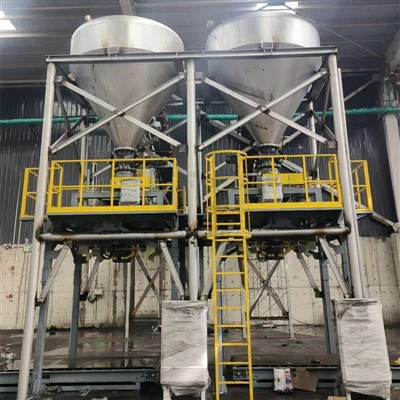
Ready to build or upgrade a dry mortar production line that delivers consistent, reliable product every time? Reach out to discuss your specific needs, whether you’re a small plant looking to improve existing consistency or a large construction company setting up a new facility.
Dust Collectors References:
- ASTM International. (2021). Standard Specification for Dry-Mixed Mortar. ASTM C150/C150M-21.
- Cement and Concrete Association. (2020). Raw Material Conditioning and Mixing Best Practices for Dry Mortar Production. CCA Technical Report Series.
- International Organization for Standardization. (2019). Requirements for Dry Mortar Production Control and Quality Assurance. ISO 10426-2:2019.
- Construction Industry Institute. (2022). Product Consistency in Pre-Mixed Construction Materials: Operational Guidelines. CII Publication 374.
- World Cement Association. (2021). Global Best Practices for Dry Mortar Production Line Maintenance and Control. WCA Industry Report.
Jiangsu Haike Environmental Tech Co., Ltd.
As one of the most professional dry mortar production lines manufacturers and suppliers in China, we’re featured by quality products and good service. Please rest assured to wholesale customized dry mortar production lines at competitive price from our factory. Contact us for quotation.
Address: No.1, Wei’er Branch Road, Shanggang Industrial Park, Jianhu County, Yancheng City, Jiangsu Province, China
E-mail: 17388487000@163.com
WebSite: https://www.jshkhbwm.com/
