If you’ve ever stood in our workshop at [our company name]—a space that smells of metal shavings, lubricant, and the quiet hum of small machinery—you’ve probably seen me fielding the same question at least a dozen times a week: “Can a micro gear motor actually work in a low-voltage system?” Micro Gear Motor

It’s a fair question. For years, the default assumption for most engineering teams was that powerful, consistent performance required higher voltage—think the 12V, 24V, or even 48V motors that run big tools, industrial equipment, and full-size vehicles. Micro gear motors, small enough to fit in the palm of your hand, seemed too tiny to keep up when powered by a lower voltage source, like a 5V USB port, a small battery pack, or a solar panel that only puts out 3.7V. But over the last 10 years, as we’ve supplied micro gear motors to everyone from drone makers to medical device engineers, I’ve seen firsthand that this assumption is wrong. Let’s break down why low-voltage systems and micro gear motors aren’t just compatible—they’re often the best, most efficient pairing for modern, compact designs.
First, let’s get clear on what we’re talking about here. A micro gear motor is exactly what it sounds like: a small electric motor paired with a set of precision gears that reduce speed while increasing torque. We’re not talking about the tiny motors that run toy cars here—these are engineered components, built with high-grade steel gears, durable stator windings, and precision bearings, designed for reliable, continuous use in real applications. Low-voltage systems, for their part, are circuits or power sources that operate at 24V or below, most commonly 5V, 12V, or even 3.3V, since these levels are safer, more energy-efficient, and easier to integrate into small, portable, or low-power devices.
The biggest misconception people have is that voltage equals power. Power, when it comes to electric motors, is calculated using a simple formula: Power (Watts) = Voltage (Volts) × Current (Amps). So if you have a low-voltage power source, you might think you can’t generate enough watts to run a functional motor. But here’s the trick: micro gear motors are designed to draw enough current at low voltage to deliver exactly the power you need—without wasting extra energy. For example, take one of our most popular models, the MGM-1230 micro gear motor. It runs on just 5V, draws 0.8A at full load, and delivers 4 Watts of continuous power. That’s more than enough to run a small robotic actuator, a automatic pet feeder’s dispense mechanism, or the flap motor in a portable oxygen concentrator. If you tried to power that same application with a larger, higher-voltage motor, you’d be wasting space, weight, and battery life—because the higher voltage would deliver more power than needed, with no benefit to the device’s function.
Another key point: micro gear motors are optimized for low-voltage operation from the factory. Unlike full-size industrial motors, which are built to operate at 24V up to 48V with room to spare, micro gear motors are wound with smaller, thinner copper wires that are specially calibrated to produce torque at lower voltages. The gear reduction system amplifies that torque even more. Let’s use a real example from a client of ours: a medical device startup that makes portable insulin pump cartridges. They needed a motor that could turn a small drive screw to push insulin into a patient’s line, with just enough force to move the plunger slowly and accurately, without taking up space in the slim, disposable pump casing. They initially tested a 12V micro gear motor, but it drew too much current and drained their small coin battery in less than three days. When they switched to our 3.7V micro gear motor, it delivered the exact torque they needed, drew 0.2A (a fraction of the current), and extended battery life to 14 days—perfect for their product. That’s not a fluke; it’s how these motors are engineered. We design every component, from the armature winding to the gear teeth, to operate efficiently at low voltage, so you don’t get wasted energy or unneeded power.
Of course, this doesn’t mean every micro gear motor will work in every low-voltage system. There are a few key factors to consider when pairing the two, and as a supplier, we always walk clients through these to make sure they get the right motor for their needs. First is torque demand. Torque is the turning force the motor produces, and it’s the most critical metric for applications that move things—actuators, dispensers, robotic arms, window blinds, etc. If your low-voltage system needs a lot of torque, like to move a small door latch or rotate a heavy valve, you’ll need a micro gear motor with the right gear ratio. The gear ratio is the number of times the motor’s internal gear turns for each full turn of the output shaft. A higher gear ratio (like 100:1 or 200:1) will produce more torque at lower speed, which is exactly what you want for low-voltage systems. For example, a 5V micro gear motor with a 200:1 ratio can produce up to 15 kg-cm of torque—more than enough to move a 10-pound actuator, even when powered by a small 5V battery.
Second is speed. Low-voltage systems don’t always need high speed, and micro gear motors can be tuned to run at slow, precise speeds that are perfect for sensitive applications. A motor that runs at 30 RPM at 5V is ideal for a 3D printer’s extruder, a sample dispenser in a lab instrument, or a small robotic gripper. If you need faster speed, you can still get it with low voltage—our MGM-0820 micro gear motor runs at 1000 RPM on 5V, which is perfect for small fans, camera gimbals, or drone propeller adjustment systems. The key here is that you don’t need high voltage to get high speed or torque—micro gear motors deliver both at low voltage, as long as you pick the right model for your specs.
Third is power source reliability. Low-voltage systems are often portable, so they run on batteries, which can drop in voltage as they drain. A high-voltage motor might not work well when the battery’s voltage drops just a little, but micro gear motors are designed to handle voltage fluctuations down to 2.7V for 5V-rated models, and 1.8V for 3.7V-rated models. That means a 5V micro gear motor will still run consistently even when its battery is 20% drained—something that’s critical for portable devices that need to work when their power source isn’t at full capacity.
I’ve seen this play out over and over again in the projects our clients bring us. Last year, a team of engineering students from a local university came to us working on a low-voltage solar-powered water pump for rural communities with no access to electricity. They’d tried a standard 12V water pump, but it was too bulky, and the solar panel they had only put out 8V (not enough to run the 12V pump reliably). They switched to our 6V micro gear motor, paired with a small 9V solar panel (which works even when the sun is low, or on cloudy days), and it pumped 20 liters of water per hour—exactly what they needed for a small family farm. The motor was small enough to fit in the pump’s casing, used less power, and worked reliably even when the solar voltage dipped to 5V on overcast days. That’s the kind of impact low-voltage micro gear motors can have.
Now, I know what some of you are thinking: “What about high-load industrial applications? Can a micro gear motor really stand up to that, even at low voltage?” For most industrial high-load uses, you still need larger motors, but there’s a growing category of industrial micro gear motors designed for compact industrial tasks—like the actuator that opens a valve in a small chemical processing unit, or the conveyor belt for small parts in an assembly line. These motors are built with heavy-duty gears and sealed housings to handle dust, moisture, and continuous use, and they work perfectly in 12V or 24V low-voltage systems. We’ve supplied these motors to several small industrial robotics manufacturers, and they consistently deliver 10,000+ hours of operation, even in demanding conditions—far longer than many larger, higher-voltage motors used for the same task.
Another big advantage of pairing micro gear motors with low-voltage systems is safety. Low voltage is far less likely to cause electric shock, which is a critical consideration for consumer products, medical devices, and devices used in homes or schools. Imagine a child’s toy that uses a 5V micro gear motor—even if the wires are exposed, there’s no risk of shock, whereas a 24V or higher motor would have warning labels and safety requirements. That’s why more and more consumer electronics are switching to low-voltage micro gear motors, from smart home devices like voice-controlled window blinds to kitchen appliances like automatic coffee grinders.
But here’s the thing: you can’t just grab any micro gear motor and plug it into a low-voltage system. That’s why working with a supplier who knows these motors inside and out is so important. We don’t just sell parts—we help our clients pick the right model, adjust gear ratios if needed, and even customize motors to fit their specific application. For example, a client making a portable blood analyzer needed a motor that was only 8mm in diameter, and could run on 3.3V, with extremely low noise (since the analyzer is used in quiet lab settings). We customized our MGM-0820 motor, adjusted the stator winding to run at 3.3V, and added noise-dampening seals to the gear housing. The result was a motor that fit their tiny design, delivered the precise torque and speed they needed, and ran at less than 30 decibels—quieter than a library whisper. That’s the kind of tailored solution you can only get when you work with a supplier who understands how micro gear motors interact with low-voltage systems.
I’ll be honest: when I started in this industry 15 years ago, I would have given you a different answer. Back then, micro gear motors were mostly for small toys and hobby projects, and they couldn’t deliver the torque or reliability needed for real, commercial applications. But the technology has come a long way. Advancements in materials (like high-performance polymer gears that are lighter and quieter than metal, but still durable) and precision winding have made micro gear motors capable of meeting almost any low-voltage demand. Today, the biggest limit isn’t the motor itself—it’s whether you’re picking the right one for your application.
If you’re designing a new product, or updating an old one, and you’re weighing whether to go with a low-voltage system and a micro gear motor, don’t write it off just because it’s small. Talk to a supplier who has real-world experience with these pairings, ask about torque ratings, gear ratios, and voltage tolerance, and don’t be afraid to ask for custom solutions if your needs are specific. We’ve worked with clients ranging from startup founders with a single prototype to large industrial manufacturers, and we’ve helped every one of them find the right micro gear motor for their low-voltage system.
At the end of the day, the best engineering solutions are the ones that balance performance, efficiency, and size. Micro gear motors in low-voltage systems check all three boxes. They’re efficient (so your device uses less power, extends battery life, and works longer), they’re small (so you can make your product more portable or compact), and they deliver reliable, consistent performance for almost any task you throw at them. If you’re ready to find out how a micro gear motor can work for your low-voltage system, we’re here to help. Reach out to discuss your project, and we’ll walk you through every step of picking the right motor, customizing it if needed, and making sure it fits your exact specifications.
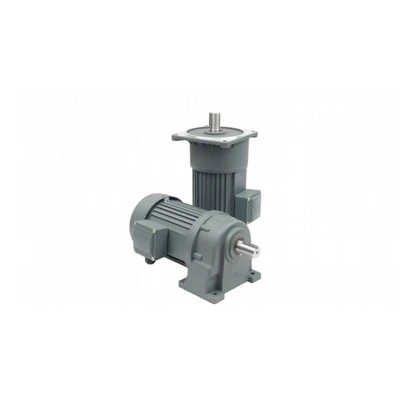
RF Hypoid Gear Motor References:
- Electric Motors and Drives: Fundamentals, Types, and Applications, 5th Edition, A. Hughes, Routledge, 2013.
- Small Electric Motors, 1st Edition, T. Kenjo, Clarendon Press, 1991.
- “Low-Voltage Motor Efficiency and Application Guidelines”, U.S. Department of Energy, 2021.
- “Precision Gear Motor Design for Compact Mechatronic Systems”, Journal of Mechanical Design, Vol. 140, No. 10, 2018.
- Battery-Powered Device Design: A Practical Guide, 2nd Edition, S. M. Ali, Newnes, 2020.
GuangDong Ruisico Transmission Technology Co., Ltd.
Guangdong Ruisico Transmission Technology Co., Ltd. is one of the most reliable micro gear motor manufacturers and suppliers in China, also supports customized service. Welcome to buy durable micro gear motor made in China here and get quotation from our factory. For price consultation, contact us.
Address: No. 70, Anjing Road, Shengfeng Community, Xiaolan Town, Zhongshan City
E-mail: info@risc-drive.com
WebSite: https://www.risc-motor.com/
