If you’ve walked along a busy consumer goods production line in the last five years, you’ve almost certainly seen one: a mechanical arm folding a shrink wrap around a case of canned soda, a robotic gripper stacking boxes of frozen meals onto a pallet, a belt system taping shut a carton of cereal. For decades, boxing and packaging were seen as low-skill, high-turnover jobs—work that relied on large teams of part-time or temporary workers, often pulled from staffing agencies to meet holiday or back-to-school demand. But as an automatic boxing machine supplier, I get asked one question more than any other from production managers, plant owners, and small business founders alike: “Does this actually save us money, or is it just another shiny piece of automation that ends up costing more than it’s worth?” Automatic Boxing Machine
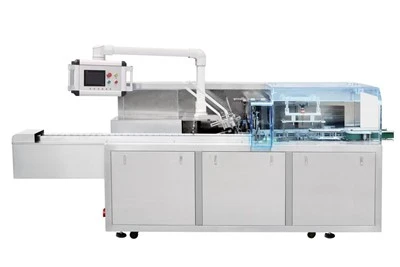
The short answer is yes, but it’s not a one-size-fits-all calculation. I’ve been working directly with manufacturing and packaging teams for nearly 12 years now, walking plant floors, adjusting machines to fit tight product runs, and crunching numbers with operations managers to show exactly where the savings land. A lot of the debate around automation savings relies on vague, industry-wide averages that don’t account for your specific operation—how big your plant is, what products you box, your current labor costs, and how often you run overtime or deal with employee turnover. Let’s break this down with real, on-the-ground examples, not just marketing jargon.
First, let’s talk about the biggest, most concrete labor cost most plant owners don’t track as closely as they should: turnover and hidden labor expenses. When I first started out, I worked with a mid-sized snack food company that had a 18-person boxing line. Their HR team told us their average turnover for packaging roles was 110% annually—meaning they replaced every single worker on that line more than once a year. At the time, that company was paying a starting wage of $14.50 an hour, plus 30% in benefits (healthcare, payroll taxes, workers’ comp) for each employee. But the real cost wasn’t the hourly wage. It was the time supervisors spent interviewing, training, and onboarding new hires—roughly 8 hours of work per new employee to get them up to speed on operating the tapers, case erecting machines, and quality checks. It was the overtime hours they had to schedule when someone called out sick last minute, a common occurrence in roles that involve repetitive, physically demanding work: lifting 50-pound boxes, standing 10 hours a day, bending to load pallets. That overtime alone accounted for 25% of their total boxing labor costs, per their 2022 financial reports.
When we installed two automatic boxing machines for that snack company, the first big shift happened right away: the line went from 18 workers to 4. Those remaining workers didn’t do the repetitive boxing—they monitored the machines, loaded product into the hopper, and spot-checked boxes for defects. Turnover on that new, less physically taxing line dropped to 12% annually. Let’s do the math here. For the old line, 18 workers, average annual cost per worker (including wages, benefits, hiring, overtime) came out to $41,200. Multiply that by 18, and their annual boxing labor cost was $741,600. For the new line, 4 workers, average annual cost of $38,000 each (lower turnover means less hiring cost, and no overtime needed for that core team) totals $152,000. That’s a savings of nearly $590,000 a year—before we even account for downtime, product damage, or quality issues from human error.
That’s not an outlier. A 2023 study from the Packaging Association of North America found that plants using automatic boxing machines saw a 62% reduction in direct packaging labor costs, on average, within the first 12 months of installation. But here’s the catch: that savings only holds if you’re not wasting machine capacity on small runs. Some of my smaller clients, like artisanal jam brands that run 500 boxes a week, initially balk at the cost of an automatic machine. They think, “I only need 100 boxes a day—why would I pay for something that runs 24/7?” But modern automatic boxing machines are modular. You can adjust speeds for low-volume runs, or use the machine’s quick-change parts to switch between jam jars and spice tins in 10 minutes, compared to 2 hours of downtime when a team of workers has to reconfigure a manual line. For that small jam brand, we installed a mid-sized machine that cost $28,000, and their labor savings went from hiring a part-time packer at $1,200 a week to zero—they or one part-time admin can now run the machine. That $1,200 a week adds up to $62,400 a year, so the machine pays for itself in about 5 months. I’ve seen clients with even smaller operations, like craft breweries packaging 12-packs of beer, save enough in one year to cover the machine and allocate extra budget to expanding their taproom.
Now, let’s address the myths that hold some businesses back from making the switch. The first is that automatic boxing machines are only for big factories with high output. That’s been true 10 years ago, but not anymore. Today’s machines are designed for small and mid-sized operations, with footprints that fit in a 10×12 space, and user-friendly controls that don’t require a dedicated automation engineer. When I meet with a small business owner who says, “I can’t afford a machine, and I don’t have space,” I show them examples of similar businesses that made it work. A craft chocolate maker in Vermont, with 2 employees total, uses a compact automatic boxing machine to package their 8-piece bars. They were paying a seasonal temp $15 an hour to box orders, and that temp would quit every two weeks during busy holiday seasons. Now, they run the machine themselves, and their order turnaround time dropped from 3 days to 1 day—so they take more orders, which actually drives additional revenue. That’s a side benefit no one talks about: labor savings aren’t just about cutting costs, they’re about scaling. If you can box 2,000 orders a day instead of 500, you don’t have to turn down new business.
The second myth is that automation replaces workers entirely, so you end up with layoffs and morale issues. In reality, automatic boxing machines change the type of work employees do, not the number of jobs. The snack company I mentioned earlier didn’t lay off anyone when they installed the machines. They reallocated 14 of their former boxing line workers to other higher-skill roles: quality control, maintenance, and training new hires. Those roles paid 10-15% more than packaging work, and employee satisfaction scores went up because the work was less physically demanding. I’ve yet to work with a client who had to lay off staff after installing an automatic boxing machine. Most use the savings and reallocated labor to expand other parts of the plant, like increasing production of new products or upgrading warehouse storage.
Of course, there’s an initial cost to consider. Automatic boxing machines range from $15,000 for compact, low-volume models to $150,000 for high-speed machines that run 100+ boxes a minute. That investment can seem steep, especially for small businesses. But when you break it down against the long-term costs of manual labor, it almost always pays for itself in 1 to 3 years. A 2022 report from the International Society of Automation found that industrial automation projects have an average payback period of 1.9 years for packaging applications, which is shorter than most other industrial automation uses. That’s because packaging labor is one of the largest recurring costs in manufacturing, more than raw materials or machinery maintenance in many cases.
I’ve also seen clients make the mistake of not accounting for hidden costs of manual boxing that eat into profits. Product damage is a big one. When workers are tired, rushed, or making repetitive mistakes, boxes get crushed, products get dropped, and damaged goods have to be discarded or returned. The Packaging Association study I mentioned earlier found that plants with manual boxing lines have a 8-10% product damage rate, while plants with automatic machines have a 1-2% rate. For a company that produces $1 million in packaged goods a year, that’s a $70,000 to $90,000 annual loss from damaged products gone when you switch to automation. Add in the cost of reworking boxes—tape, labels, and boxes themselves cost money—and the number jumps even higher.
Another hidden cost: compliance and safety. Manual packaging lines have a higher rate of workplace injuries, according to the Occupational Safety and Health Administration (OSHA). Packaging roles account for 15% of all repetitive motion injuries in manufacturing, like carpal tunnel syndrome, back injuries from lifting heavy boxes, and slip-and-fall accidents in busy plant floors. Those injuries lead to workers’ compensation claims, which drive up insurance premiums, and missed work time that requires overtime to cover. A mid-sized plant with 50 packaging workers could see $50,000 to $100,000 a year in workers’ comp costs related to that line. Automatic boxing machines eliminate most of those risks—workers don’t lift heavy boxes, don’t perform repetitive motion, and the machines have built-in safety guards that prevent accidents. That’s another labor cost saved that many plant owners don’t factor into their initial calculations.
Now, I’ll be clear: an automatic boxing machine isn’t right for every operation. If you produce fewer than 100 boxes a week, and you don’t plan on scaling, the cost may not make sense. If your product is unusually large or irregularly shaped in a way that requires custom parts the machine can’t handle, you may need a manual line temporarily. But for most growing businesses—from small food producers to mid-sized consumer goods manufacturers—automatic boxing machines deliver tangible, long-term labor savings that far outweigh the initial investment.
What I’ve learned over 12 years in this business is that the question “does it save labor costs?” should never be answered with a yes or no. It’s a question that requires looking at your specific operation: your current turnover rate, overtime costs, product damage, and safety expenses. That’s why my team doesn’t just sell machines—we do a free assessment of your current line, walk through your numbers, and show you exactly how much you can save before we even talk about purchasing. We’ve worked with clients who thought they couldn’t afford automation, and now they’re expanding their operations, hiring more skilled workers, and seeing higher profit margins because they cut unnecessary labor costs.

If you’re a plant manager, small business owner, or operations lead who’s been weighing the switch to an automatic boxing machine, don’t just go by industry averages or marketing claims. Reach out, and we can put together a custom breakdown for your operation. The savings are there—you just have to calculate them for your specific business, not someone else’s.
Food Bagging Machine References
Packaging Association of North America. (2023). Automation Impact Report: Labor Costs and Productivity in Modern Packaging Lines.
International Society of Automation. (2022). Payback Period Analysis for Industrial Packaging Automation Projects.
Occupational Safety and Health Administration. (2021). Repetitive Motion Injuries in Manufacturing Packaging Roles.
Zhejiang Tuoyu Packaging Machinery Co., Ltd.
Zhejiang Tuoyu Packaging Machinery Co., Ltd. is one of the most professional automatic boxing machine manufacturers and suppliers in China. With abundant experience, we warmly welcome you to wholesale durable automatic boxing machine made in China here from our factory. Good service and quality products are available.
Address: Workshop No.12, No.11-19, Xinbin Road, Binhai New Area, Pingyang County, Wenzhou City
E-mail: 15868789201@163.com
WebSite: https://www.tuoyupack.com/
