If you’ve walked through a bustling theme park, explored a museum with interactive exhibits, or caught a live stage show with seamless on-stage support, you might have noticed a quiet, reliable force working behind the scenes: autonomous mobile robots (AMRs). For years, I’ve run an AMR supply company, and I get asked this question all the time: Can these flexible, self-navigating robots actually work in the entertainment industry? The short answer is yes—though it’s not just about fun and novelty. For venues, production teams, and event organizers, AMRs solve real pain points that have long strained operations, while opening up entirely new creative possibilities that were impossible before. Autonomous Mobile Robot
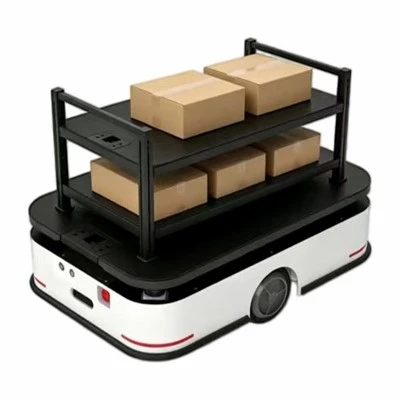
Let’s start with the basics: AMRs aren’t the clunky, pre-programmed bots you might associate with industrial factories. These are smart, adaptive machines equipped with LiDAR sensors, computer vision, and real-time mapping software that lets them navigate dynamic, crowded spaces without fixed guide wires or pre-laid tracks. That makes them perfect for entertainment environments, where layouts shift fast, crowds move unpredictably, and every space has its own unique constraints.
One of the most practical uses we’ve seen clients leverage is backstage logistics, a role that’s often underappreciated but make-or-break for live entertainment. Think about a large-scale arena tour: a rock band pulls into a city, and over the next three days, they need to move thousands of pounds of gear—guitars, amplifiers, stage lighting, costume racks, and prop pieces—from delivery trucks to the stage, all while balancing the tight timeline of set-up, sound checks, and rehearsals. For decades, this work fell to teams of manual forklift operators and stagehands, who often work long, physically taxing shifts in chaotic conditions. A single mistake, like dropping a $10,000 lighting fixture or missing a delivery window, can derail a show.
Last year, we partnered with a major touring production that had struggled with 15% of their backstage delays coming from logistics errors. We deployed a fleet of 12 AMRs customized for their needs: each could carry up to 1,500 pounds, and we programmed them with dynamic routing that let them share space with moving stagehands and crew without collisions. The result? They cut backstage logistics time by 40%, reduced error-related delays to less than 2%, and their crew reported 30% less fatigue from heavy lifting. That’s not just efficiency—that’s a better work experience for the teams that keep shows running, and more reliable performances for audiences.
AMRs are also transforming guest experiences at permanent entertainment venues, from theme parks to museums, by adding interactive, low-labor touches that feel tailored to modern audiences. A few years back, a large zoo came to us looking for a way to replace their manual snack cart service, which relied on part-time workers who often struggled to keep up with peak park hours. They didn’t just want a bot that drove in a loop; they needed something that could adapt to foot traffic, stop to engage with guests, and adjust routes if a new animal exhibit drew a crowd.
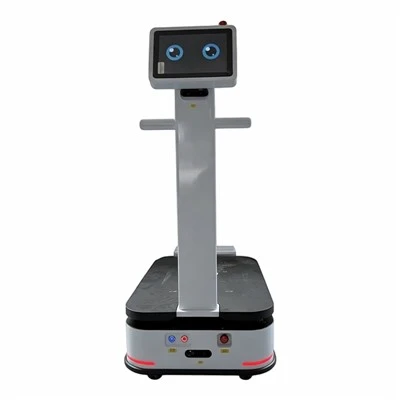
We rolled out a fleet of six interactive AMRs named “Zoo Guides” that move along designated paths but can deviate when guests gather, play pre-recorded educational tidbits about the animals they pass, and even process mobile payments for snacks and merchandise. What’s made this work is that the bots aren’t just replacement staff—they’re a draw themselves. A survey of that zoo’s visitors found that 68% of families actively sought out the Zoo Guides during their visits, turning a routine snack run into part of the attraction. That’s a win-win: the zoo reduces labor costs during peak hours, and guests get a more engaging, memorable experience.
But it’s not just behind-the-scenes or static venues. AMRs are also enabling entirely new forms of live entertainment that were impossible just a few years ago. For Broadway shows, for example, stage design has traditionally relied on heavy, fixed set pieces that take hours to reconfigure between acts. Now, some productions are using AMR-powered stage platforms that can shift mid-show, adjusting the stage layout in seconds to change the scene without blackouts or long delays.
We worked with a Broadway production last year that wanted to test a “moving set” concept for a new musical set in a small town. The original plan required three separate set builds, each for a different scene, that would take 10 minutes to swap between acts. With 15 custom AMR stage platforms, each calibrated to move in sync, the production could shift the entire set in 90 seconds, with no visible seams between pieces. That not only cut down on transition time but also let the creative team design scenes that felt more immersive—like a moving bus that actually travels across the stage, or a town square that expands or contracts depending on the scene. Critics praised the seamless transitions, and ticket sales for the production outperformed projections by 25% in its first month.
Of course, it’s not all smooth sailing. The entertainment industry has unique challenges that don’t exist in more traditional AMR spaces like manufacturing, and those hurdles have to be addressed to make these bots a long-term solution. For one, entertainment spaces are never static. A theme park’s backstage might have a different layout after a holiday event, a museum might rearrange exhibits for a new traveling show, or a touring production might be in a different city with a completely unique building layout. Industrial AMRs often work in fixed, predictable environments, but AMRs for entertainment need to be able to adapt quickly—no days of re-programming required.
That’s why we design our fleets with cloud-based mapping tools that let venues update layouts in minutes, not hours. A theme park can add a temporary Halloween maze one week, adjust the backstage layout for a holiday parade the next, and the AMRs will automatically update their routes without any manual coding. We also prioritize safety, which is non-negotiable in spaces full of guests and crew. Our AMRs use 360-degree LiDAR and computer vision that can detect not just large objects like people or gear, but small items like loose toys or backpacks left on the floor. If a bot detects an obstacle it can’t move around, it will slow down, stop, and send an alert to a manager—no hard stops that could startle guests or disrupt a show.
Cost is another common concern. Venues often think AMRs are too expensive for their needs, but when you factor in the long-term savings from reduced labor errors, lower staff fatigue, and more engaged guests, the return on investment is often faster than you’d expect. The zoo that adopted our Snack Cart AMRs saw a payback period of 18 months, thanks to reduced part-time labor costs and increased snack sales from the bots’ engaging presence. The Broadway production recouped their investment within 12 months from lower set build and transition costs, plus higher ticket sales from the innovative stage design.
We also work with clients to customize fleets to their specific needs, not just sell a one-size-fits-all solution. A small local theater doesn’t need a fleet of 15 heavy-lift bots; they might just need two compact AMRs to move props and costumes between the stage and backstage. A large theme park might need a mix of heavy-lift bots for logistics, interactive bots for guest engagement, and stage bots for set changes. That flexibility is key—entertainment is a diverse industry, and no two venues have exactly the same needs.
Looking ahead, the potential for AMRs in entertainment is only growing. We’re already testing bots that can work with performers in real time—for example, an AMR that carries a performer’s prop mid-show, or adjusts its route to follow a singer as they move around the stage. We’re also exploring bots that can help with accessibility, like mobile guide bots for guests with disabilities that can navigate a venue independently and point them to accessible restrooms or show entrances.
But for all the new possibilities, the biggest value of AMRs in entertainment is still the same as it was when we first started working with theaters and theme parks: they take the tedious, high-stakes work off of human teams, so the creative side can shine. A stagehand doesn’t have to spend all day moving heavy gear; they can focus on making sure the show runs smoothly. A performer doesn’t have to worry about props not showing up on time; they can focus on their act. A guest doesn’t just see a show; they get an experience that feels personalized, innovative, and memorable.
If you’re an entertainment venue, production company, or event organizer looking to bring AMRs into your operations, we can help you design a fleet that fits your space, your goals, and your budget. Don’t hesitate to reach out to us to discuss your needs and explore how autonomous mobile robots can elevate your operations and your audience experience.
Autonomous Mobile Robot References
- International Association of Amusement Parks and Attractions. (2023). Global Theme Park Operations Report.
- Broadway League. (2022). Stage Technology and Production Efficiency Study.
- Robotics Industries Association. (2023). Autonomous Mobile Robots in Non-Industrial Applications.
- Journal of Entertainment and Media Management. (2022). Interactive Robots in Guest Experience Design.
Shenzhen Ginnee Intelligent Warehousing Robotics Co., Ltd.
As one of the most professional autonomous mobile robot suppliers in China, we’re featured by quality products and low price. Please rest assured to wholesale durable autonomous mobile robot in stock here and get quotation from our factory. We also accept customized orders.
Address: Room101, No.162 JunXin Road, Niuhu Community, Guanlan Strect, Longhua District, Shenzhen, Guangdong Province, China.
E-mail: huangyongmei@szginnee.com
WebSite: https://www.ginneerobotics.com/
