Hey everyone, it’s Jake here – and if you’re reading this, chances are you already know how vital CNC milling is for turning a block of raw material into something tangible, whether that’s a aerospace bracket, a medical implant part, or a custom bike frame. I’ve been running a CNC milling supply shop for 12 years now, and let me tell you, the tech in this space has blown up way more than I thought it would back when I first started with a beat-up 3-axis machine in a garage. Today, I’m gonna break down the emerging stuff that’s not just hype – it’s already changing how we do jobs, cut costs, and get parts out faster. CNC Milling

First off, let’s get real: most people think CNC milling is just “push a button and make parts.” Nah, the emerging tech here is all about making those machines smarter, not just bigger or faster. One of the biggest ones I’ve been messing with over the last 18 months is adaptive control systems with real-time sensor integration. You know how old machines would just plow through a job, even if the material’s surface is uneven, or the tool’s wearing down, or there’s a tiny chip stuck in the cut? That leads to broken tools, scrapped parts, and downtime. The new adaptive control setup I installed on our 5-axis mills uses micro-sensors on the spindle and tool holder that track things like vibration, torque, and temperature every 10 milliseconds. If the sensor picks up a vibration spike, it slows the feed rate for a split second – no human needed to adjust it. Last month, we ran a batch of 20 titanium brackets for a customer, and the tool breakage rate dropped from 12% to 2% – that’s huge. I actually had a customer call me last week saying he saved $4,000 on tooling alone after we switched to this.
Another area that’s been blowing up is multi-axis machining that’s paired with generative design software. Wait, let me explain that like I’m talking to a buddy. Generative design isn’t just CAD – it’s where you input what the part needs to do (hold 500 lbs, fit in a 2x2x2 inch space, light as possible) and the software spits out 100 different part shapes. Before, we’d have to modify that design to make it millable – no undercuts too sharp, no shapes a cutter can’t reach. But now, with 5-axis mills that can tilt the tool at any angle, we don’t have to dumb down the design as much. We just program the machine to follow the tool path exactly where the generative design says it needs to be. A few months back, we did a custom aluminum drone arm for a startup – generative design gave us a part that was 30% lighter than the original, and the 5-axis mill cut it in one setup, instead of three like we would have done with a 3-axis. That cut the lead time from 2 weeks to 3 days. No more juggling multiple setups, no more alignment errors between stages.
Wait, and don’t sleep on low-force machining for delicate materials. A lot of our customers work with stuff like medical-grade stainless steel, carbon fiber composites, or even soft plastics like PEEK – materials that tear, warp, or melt if you hit ’em with too much force. The old way was to run super slow feed rates and tiny cuts, which would take forever. Now, there’s this new tech with high-frequency spindles that spin up to 60,000 RPM – way faster than standard 10,000 to 15,000 RPM spindles. Pair that with precision tooling made from diamond-coated carbide, and you can cut those delicate materials with way less force, no warping, no burrs. We tested this on a batch of 50 PEEK spinal implants last quarter – before, we’d have 5-10% scrapped parts from over-cutting or heat damage. With the high-frequency spindle? Zero scrap, and each part cut in 15 minutes instead of 45. That’s a game-changer for medical customers who can’t afford to mess up a part that goes inside someone’s body.
Oh, and let’s talk about automated workholding with robotic loading/unloading. I know some guys in the shop were skeptical when we bought the first robot two years ago – “it’s just a fancy paperweight, right?” But now, our day shift runs 12 hours straight without a human touching the machine. The robot grabs raw stock out of a bin, loads it into the vise, runs the full job, unloads the finished part, and drops it back for inspection. We still have a human to program the robot and check parts, but the downtime between jobs went from 20 minutes per setup to 2 minutes. Last week, we ran a 500-part batch of brass electrical connectors overnight – no one had to be here, and it was done by 7 AM, ready for the customer to pick up. That’s not just for big companies either; we’ve got a small aerospace customer (only 10 people) that uses our automated setup to run small batches 24/7, which lets them compete with way bigger shops.
Wait, but not all emerging tech is hardware. There’s also digital twin simulation for CNC milling. A digital twin is basically a 3D copy of your machine, right? Before you run a job, you plug the G-code into the twin, and it simulates the entire cut – checks for collisions between the tool, the workholding, the machine itself, even chips that might get in the way. I can’t tell you how many times we used to have a tool crash into the vise mid-job – that would ruin a $500 tool, damage the machine, and scrap the whole batch. Now, we run every job through the twin first. Two weeks ago, we caught a tiny collision between a new tool’s shank and a custom fixture that our old simulation software missed. Without the digital twin, that would’ve cost us $1,200 in tools and a day of downtime. It also lets us tweak the tool path before we even cut a part, so we optimize the speed and feed rates to cut time without sacrificing quality.
Now, let’s be real – none of this is cheap. The adaptive control setup, the 5-axis mill, the robot, the digital twin software – it’s a big investment for a shop like mine. But here’s the thing: the customers that adopt this tech end up winning. They get parts faster, cheaper, and better than their competitors. I see it every day – we’ve got clients in aerospace, medical, automotive, and even consumer goods that come to us because they know we have the latest gear to get their jobs done right.
Wait, but it’s not just about buying new machines. A lot of guys in the shop get stuck in their ways, using the same G-code tricks they learned 10 years ago. The emerging tech also requires upskilling – we send our machinists to training every quarter to learn how to program the adaptive control, work with generative design, and maintain the robots. That’s a big part of it too – the tech only works if you know how to use it. If you’re a small shop like mine, you can’t just buy a fancy robot and hope for the best. You’ve got to invest in your people too.
I wanna hear from you guys too. Are you a machinist who’s used any of this new tech? Or a customer who’s had issues with CNC milling lead times or part quality? Hit me up – I always chat with folks on our shop’s social pages, and I’m here to answer questions.
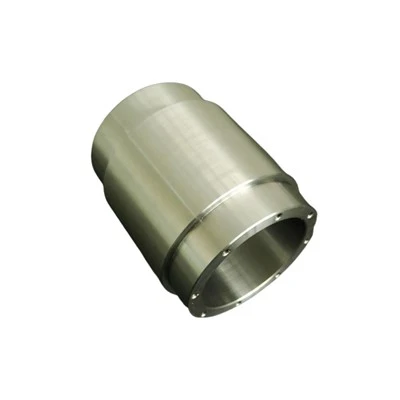
If you’re tired of dealing with a supplier that runs old, unreliable machines that mess up your parts or take forever, let’s connect. We work with businesses of all sizes – from startups that need 10 custom parts to big companies that need 10,000 part batches. We can walk you through what tech would work for your specific job, give you a quote, and make sure you get parts that meet your specs, fast. Don’t settle for the same old CNC milling when there’s new stuff that’s way better.
Aluminum Die Casting References
- SME (Society of Manufacturing Engineers). "Adaptive Control for CNC Machining: Current Trends and Industrial Adoption," 2023.
- Modern Machine Shop. "Generative Design Pairing with 5-Axis Machining Reduces Lead Times for Complex Parts," 2024.
- Manufacturing Engineering Association. "Low-Force High-Frequency Machining: Solutions for Delicate Material Applications," 2023.
- Robotic Industries Association. "Automated Workloading for Small-Batch CNC Milling: ROI Analysis for Job Shops," 2024.
- Digital Manufacturing and Design Innovation Institute. "Digital Twins for CNC Machining: Collision Prevention and Process Optimization," 2023.
Shenzhen Shunhaoda Technology Co., Ltd.
With abundant experience, we are one of the most professional CNC milling manufacturers and suppliers in China. If you’re going to buy bulk high quality CNC milling made in China, welcome to get free sample from our factory. Also, custom service is available.
Address: 902, Building A3, Tianrui Industrial Park, No. 35 Fuyuan 1st Road, Zhancheng Community, Fuhai Street, Bao’an District, Shenzhen
E-mail: sales@shdindustry.com
WebSite: https://www.shd-industry.com/
