Alright, let’s cut to the chase — if you’re in the market for gearboxes (or already dealing with one that’s acting up), reliability is basically the holy grail. After 12 years as a gearbox supplier, I’ve seen every possible thing that can tank a gearbox’s life, and it’s not just one thing — it’s a messy mix of design, assembly, how you use it, and even the stuff that happens after it leaves our factory. Let’s break this down like we’re chatting in our warehouse, not writing a textbook. Gearbox

First up: design flaws that sneak past even the best engineers. Look, a lot of people think gearboxes are just big metal boxes with gears spinning inside, but that’s super reductive. We once had a customer who came back with a gearbox that died in 6 months — turns out the designer messed up the gear tooth profile. They used a standard involute profile for a high-torque application, but that profile wasn’t optimized for the uneven load the customer was putting on it. Wait, another thing: bearing selection. Too many cheap gearbox makers grab generic bearings off Amazon-style suppliers, not ones rated for shock loads or the specific RPM the gearbox will run at. I’ve had a farmer yell at me because his new gearbox burned up mid-harvest — turns out the cheap bearings it came with couldn’t handle the constant start-stop of tractor PTO. Oh, and lubrication system design! If the oil flow is wrong — like, not enough to cool the gears during heavy operation, or it’s directing oil to the wrong parts — that’s a ticking time bomb. We’ve fixed so many designs where the oil slinger was the wrong size, so half the gear teeth went dry every time the gearbox tilted (looking at you, construction equipment that drives over bumpy terrain).
Next on the list: manufacturing and assembly shortcuts. Here’s the thing — every gear we machine has to be perfectly aligned, right? If the gear teeth have even a tiny burr left after deburring, that’s going to wear down the mating gear faster than anything. Or if the housing has a mill that’s off by 0.02mm, the gears will bind every time they spin, creating extra friction and heat. We once visited a competitor’s shop (don’t tell anyone) and saw them using a hand file to finish gear teeth instead of our CNC grinders. No wonder their gearboxes fail! Assembly is even bigger. When you put the gears, shafts, and bearings together, if you over-torque the bolts holding the housing halves, you warp the housing — same problem as a milled part. Under-torque them, and the housing leaks oil, leading to dry gears. And don’t get me started on seal installation. If you poke a hole in the oil seal while putting it in, or install it backwards, that oil will leak out in weeks, and you’ll have a gearbox full of metal shavings in no time. We actually had an intern make this mistake last year — he pressed a seal in with the wrong tool, nicked it, and 3 weeks later the customer was calling us saying their whole conveyor line shut down. We fixed it for free, but that’s a mistake we never want to repeat.
Then there’s the operational side — this is where most people mess up, honestly. You could have the best gearbox in the world, but if you use it wrong, it’s garbage. Overloading is the biggest one. A lot of customers look at the “max torque” rating and think that’s what they should run it at 24/7. Newsflash — that max is a short-term peak, not continuous. A packaging plant we work with was running their gearbox at 110% torque nonstop because they wanted to cram more packages through. Within 8 months, the gear teeth pitted so bad they had to replace the whole unit. Another big operational mistake: improper lubrication. People either use the wrong oil (like a cheap motor oil instead of gear oil with extreme pressure additives) or don’t change it often enough. Gear oil isn’t the same as engine oil — it has special additives to prevent wear under high pressure. And if you don’t drain the old oil and replace it with fresh, water and metal shavings build up in the oil, acting like sandpaper inside the gearbox. We once had a mine customer who only changed their gear oil once a year (the manual said every 6 months) — the oil turned black and sludge-like, and the gears seized up. We tried to tell them, but they said “it’s fine” until their $100k conveyor line was down for 2 weeks. Also, operating conditions — high temperatures, dust, moisture. If your gearbox is outdoors in the desert, where it’s 120°F during the day, the oil thins out and can’t lubricate properly. If it’s in a sawmill, sawdust gets into every crack, wearing down seals and gears. We make gearboxes for sawmills with dust covers and extra-sealed bearings, but if the customer refuses to use those, they’re asking for trouble. And shock loads — like a crane that drops a load suddenly, or a press that slams down. Gearboxes aren’t made for that, unless they’re specifically rated for it. A customer once used a standard gearbox for a rock crusher — every time a big rock went through, it hit the gear teeth. That’s why we offer custom shock-load rated units, but a lot of people skip that to save money.
Wait, also contamination — I touched on this earlier, but it’s worth its own section. Contaminants can come from inside (metal shavings from machining/assembly) or outside (dust, water, dirt). Even a tiny metal shaving left in the gearbox after assembly will act like a chisel, carving grooves into the gear teeth as soon as the gear spins. We have a strict cleaning process here — after machining, every gear goes through a parts washer, then we blow them out with dry nitrogen, then inspect them under a microscope. But some cheaper suppliers skip this step, so their gearboxes have hidden metal shavings that only show up after a few months. External contamination is even worse — if water gets into the gear oil, it causes rust on the gear teeth, which wears down faster. We had a food processing customer a while back, their gearbox was near a washdown station, so water was seeping in every time they cleaned. The rust made the gears wear thin, and they had to replace the gearbox twice in a year. Now we add extra seals for washdown applications, but it’s something you have to plan for upfront.
Oh, and maintenance neglect — a lot of people buy a gearbox, stick it in a machine, and forget about it until it breaks. That’s a huge mistake. Simple things like checking the oil level every month, listening for weird noises (grinding, whining, clunking), and tightening bolts when needed can extend a gearbox’s life by years. We have a maintenance checklist we give all our customers, and the ones that follow it have gearboxes that last 15+ years, while the ones that ignore it are replacing theirs every 2-3. Last quarter, we did a follow-up with a brewery customer who installed our gearbox 10 years ago — they changed the oil every 6 months, checked the seals, and it’s still running like new. They even added a second line because our gearbox held up.
Let’s be real here — there’s no such thing as a gearbox that will last forever. But the difference between a gearbox that runs 5 years and one that runs 20 is all about those factors I just mentioned. As a gearbox supplier, we don’t just sell you a box of gears and parts — we work with you to pick the right design, make sure every part is built to spec, give you the maintenance tips, and even customize units for your specific conditions. We’ve been doing this long enough to know that cutting corners in design, manufacturing, or use is a lose-lose for everyone.
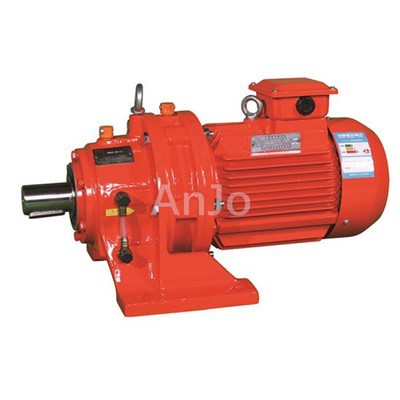
If you’re having issues with a gearbox that’s failing too soon, or you’re looking for a new one that’s actually reliable, hit us up. We don’t do generic one-size-fits-all garbage. We’ll ask you about your application, load, operating conditions, and help you pick a gearbox that’s built to last. No sales jargon, no hidden fees, just real advice from people who fix gearboxes every single day. Don’t wait until your line goes down mid-shift — reach out now, and we’ll make sure your gearbox works as hard as you do.
BLDC Worm Gear Motor References:
- American Gear Manufacturers Association. (2021). Gearbox Reliability and Failure Analysis Guidelines. AGMA International.
- Heywood, J. B. (2019). Lubrication Basics for Industrial Gearboxes. Industrial Lubrication and Tribology, 71(3), 345-352.
- Noria Corporation. (2020). Contamination Control: The #1 Cause of Gearbox Failure. Machinery Lubrication Magazine.
Hangzhou ANG Drive Co., Ltd.
We’re well-known as one of the leading gearbox manufacturers and suppliers in China, also support custom service. Please feel free to wholesale high quality gearbox made in China here from our factory. Contact us for more details.
Address: No.185, Jincheng Rd., Hangzhou 311202, China
E-mail: export6@angdrive.com
WebSite: https://www.angdrive.com/
