If you’ve been around catalyst manufacturing for even a little while, you know how critical every step is. Catalysts aren’t just materials—they’re the tiny, specialized workhorses that turn crude oil into gasoline, speed up industrial chemical reactions, and even reduce emissions from factories. A misstep in their preparation can ruin an entire batch, leading to wasted time, raw materials, and money. That’s why so many people new to the field (and even some seasoned veterans) ask me on a regular basis: Can a box furnace be used for catalyst preparation? Box Furnace
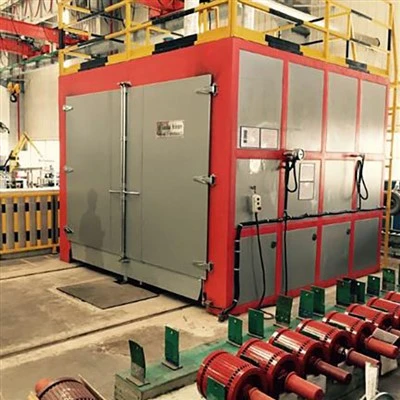
I’m a supplier of box furnaces, not a chemical engineer, but over the years I’ve worked closely with hundreds of catalyst manufacturers, lab researchers, and university teams. I’ve seen this question come up again and again, usually from folks who are weighing their equipment options and trying to avoid overspending on a furnace that might be too specialized. The short answer is: Yes, a box furnace absolutely can be used for many catalyst preparation processes. But the long answer is where you need to dig into the details to make sure you’re not setting yourself up for trouble.
First, let’s break down what catalyst preparation typically involves. Most catalyst production, whether on lab scale for R&D or small-batch industrial runs, follows a few core steps. You start with a precursor—often a metal salt, metal oxide, or a combination of materials like alumina or silica. Next comes shaping: you might pelletize the precursor, extrude it into cylinders, or coat it onto a support material. Then, the most heat-dependent step: calcination. That’s where you heat the shaped precursor to high temperatures to remove volatile components (like water, nitrates, or organic binders), convert it into the active catalytic phase, and stabilize its structure. Some processes also need reduction, where you heat the calcined material in an inert or reducing atmosphere (like nitrogen or hydrogen gas) to turn metal oxides into active metal particles.
That’s exactly where a box furnace shines. Box furnaces are designed for batch processing, meaning you load a tray or rack of materials into a closed chamber, heat it to a precise temperature, hold it there for a set amount of time, and then let it cool. Unlike continuous furnaces (which move materials through a heated tunnel), box furnaces offer flexibility, which is perfect for most catalyst prep. For lab researchers testing a new catalyst formulation, being able to adjust temperature ramps, hold times, and even atmosphere easily is non-negotiable. For small-batch industrial manufacturers, it’s more cost-effective to run batches than to invest in a continuous line until you know a formulation is viable at scale.
Let’s talk specifics about calcination, because that’s the step most people associate with heat treatment for catalysts. Take a common example: making a nickel-based catalyst for hydrogen production. The precursor might be nickel nitrate mixed with alumina powder, pelletized into small beads. To calcine this, you need to heat the pellets slowly (to avoid cracking, which would ruin their shape and surface area) to around 500-600°C, hold that temperature for 2-4 hours to burn off the nitrate and binders, then cool gradually. A well-calibrated box furnace can do that exactly. I’ve had clients who’ve been using our box furnaces for this exact process for over a decade—they run 10-pound batches every week, and their catalyst yield and activity are consistent enough that they don’t see a need to switch to a more expensive specialized furnace.
What about atmosphere? Some catalyst preparations require more than just air. For example, if you’re making a noble metal catalyst (like platinum or palladium), you might need to heat in an inert atmosphere (argon or nitrogen) to prevent the metal from oxidizing before you do the reduction step later. Or for reduction, you might need to flow hydrogen through the furnace chamber. The good news is that modern box furnaces can be adapted for this. Most have ports on the chamber that let you attach gas lines, and you can program the furnace to switch between atmospheres during the heating cycle. A lot of labs and small manufacturers don’t realize that you don’t need a custom atmospheric furnace to do this—you just need a box furnace with the right features, which we offer as standard upgrades.
But here’s where it’s not a one-size-fits-all. Box furnaces aren’t the right choice for every catalyst prep process, and that’s important to know if you’re making a decision. Let’s say you’re scaling up to 100-kilogram batches or more. For large-scale production, a continuous rotary kiln or pusher furnace is often more efficient, because it can run 24/7 without stopping to load and unload batches. Or if your process requires very precise, uniform heating across every part of the chamber—for example, some highly sensitive catalysts need temperature variations of less than 5°C across the load—you’ll want to make sure you get a box furnace with multiple thermocouples and uniform heating elements. Not all box furnaces are built the same, as a supplier, I’ve seen cheap models that have hot spots or cold spots, which can make your catalyst batches inconsistent. That’s why we design our box furnaces with a modular heating system and three internal thermocouples to monitor temperature across the entire chamber, so every part of your batch gets the same heat treatment.
Another factor is load size. If you’re working with very small lab batches—say, a 50-gram sample for testing a new catalyst formulation—any basic box furnace will work. But if you’re doing small industrial runs (like 50-kilogram batches), you’ll need a box furnace with a large enough chamber, and you’ll have to make sure that the load isn’t packed too tightly. If you stack pellets too high or pack them in a way that blocks airflow, you’ll get uneven heating and calcination. I always advise clients to spread their catalyst material in thin layers on the tray, leave space between trays if you’re using multiple, and use trays that are designed for high-temperature use (like alumina or quartz, not steel that can oxidize at high heat). That’s a small detail, but it makes a big difference in the quality of your final catalyst.
I also get questions about cost, and that’s where box furnaces really stand out. Specialized catalyst furnaces can cost two or three times as much as a comparable box furnace, especially when you add in atmosphere control. For teams that are just starting out, or for companies testing a new catalyst line where the final yield isn’t guaranteed, a box furnace lets you get the heat treatment you need without a huge upfront investment. I had a startup client a couple years ago who was working on a new emissions-reduction catalyst for cars. They were running small lab batches to perfect their formulation, and once they got it right, they scaled up to 50-kilogram runs with our box furnaces before moving to a continuous line. They told me that if they’d had to buy a specialized furnace upfront, they would’ve run out of money before they got their first customer. That’s the kind of flexibility box furnaces offer that you don’t get with more specialized equipment.
But let’s not ignore the pitfalls. One common mistake I see is customers trying to use a standard box furnace that’s not rated for the temperatures they need. Many basic lab box furnaces max out at 1000°C, but some catalyst calcination steps need 800°C or more, and others go up to 1200°C for high-temperature applications like solid oxide fuel cell catalysts. If you buy a furnace with a maximum temperature of 1000°C and try to run it at 1100°C, you’ll damage the heating elements and the chamber, which can be a costly repair. That’s why it’s important to match your furnace’s maximum temperature to your process. We offer box furnaces that go up to 1700°C, so no matter what temperature you need for your catalyst prep, we can provide the right model.
Another issue is control over heating and cooling rates. Some catalysts are very fragile—if you heat them too fast, their structure can crack, and if you cool them too quickly, they can develop uneven porosity, which kills their activity. A good box furnace lets you program the heating ramp rate (like 5°C per minute instead of 20°C per minute) and the cooling rate, which is exactly what you need for these sensitive materials. Cheap, old box furnaces often have manual controls that don’t let you adjust these rates, so your batches end up inconsistent. Our furnaces have digital programmable controllers with up to 20 ramp-and-hold steps, so you can replicate exactly the heat treatment you used in the lab every time you run a batch. That’s crucial for scaling from lab to production.
Let’s also talk about post-calcination steps, like reduction. I mentioned earlier that some catalysts need to be heated in a reducing atmosphere. Our box furnaces can be fitted with a gas flow system that lets you introduce nitrogen, argon, or hydrogen into the chamber, and you can set the flow rate as part of your program. For example, if you’re reducing a copper-based catalyst, you can heat the material to 300°C in air, then switch to a 5% hydrogen-nitrogen mix and hold for 3 hours. Most specialized reduction furnaces do this, but a box furnace with the right upgrades can do it just as well, at a lower cost. I have an industrial client that runs 20 reduction batches a week for their methanol synthesis catalyst, and they’ve used our box furnace with gas controls for 5 years without a single issue. They told me they saved over $50,000 in upfront costs by going with a box furnace instead of a dedicated reduction furnace.
So, putting it all together: A box furnace is not just a viable option for catalyst preparation—it’s often the best option for a wide range of users, from lab researchers to small-batch industrial manufacturers. The key is to match your furnace’s features to your specific process. If you’re doing lab-scale R&D, a basic box furnace with programmable controls will work. If you’re running small industrial batches, look for one with uniform heating, enough chamber space, and the ability to add atmosphere control. If you need high-temperature calcination, make sure the furnace is rated for the maximum temperature you’ll use.
I’ve been in this game for years, and I’ve seen too many people overcomplicate their equipment choices. They think they need the most specialized, expensive furnace on the market, only to realize they don’t use half its features. A box furnace gives you the flexibility to adjust your process as you refine your catalyst, without locking you into a single setup. Whether you’re testing a new formulation in a lab or scaling up a proven one, a box furnace can deliver the consistent heat treatment your catalyst needs to perform.
If you’re not sure which box furnace is right for your catalyst preparation process—whether you’re working on a lab scale or looking to upgrade your small-batch production—we can help. We’ve worked with hundreds of catalyst manufacturers, from startups to established industrial firms, and we can walk you through the features you need to get consistent, high-quality results for your catalysts. Reach out to us to discuss your requirements, and we’ll recommend the right box furnace for your process, no extra fluff, no unnecessary costs.
Annealing Furnace References
- Smith, R. et al. Industrial Catalysis: Principles and Applications. Wiley, 2019.
- Garcia, M. et al. “Heat Treatment Effects on Alumina-Supported Nickel Catalysts for Hydrogen Production.” Journal of Catalysis, vol. 327, 2015, pp. 45-56.
- National Institute of Standards and Technology. “Thermal Processing of Catalyst Materials,” NIST Special Publication 1187, 2021.
- Chen, L. et al. “Comparison of Batch Furnaces and Continuous Kilns for Small-Scale Catalyst Production.” Industrial & Engineering Chemistry Research, vol. 58, no. 22, 2019, pp. 9345-9353.
Jiangsu Fangwei Furnace Industry Co., Ltd.
Jiangsu Fangwei Furnace Industry Co., Ltd. is one of the most professional box furnace manufacturers and suppliers in China. With abundant experience, we are committed to providing high quality customized products with competitive price. Please feel free to buy advanced box furnace made in China here from our factory.
Address: No.168, HuangNian Bridge, DaoShu Town, Danyang City, JiangSu Province, China
E-mail: fangwei@fwfurnaces.com
WebSite: https://www.fwfurnaces.com/
