If you’re a machinist, production manager, or small shop owner working with vertical CNC lathes—you know that your cutting tools are the unsung heroes of your operation. A dull, improperly stored, or misaligned end mill, insert, or boring bar doesn’t just slow down a job; it can turn a $50 production run into a $500 scrap pile in minutes. As a vertical CNC lathe supplier, I work with shops every day that skip simple storage steps, and the damage adds up fast. Last quarter, I had a customer in Detroit’s automotive parts sector replace 12 high-performance carbide inserts because they were stored loose on a metal shelf, exposed to shop coolant and metal shavings—costing them almost $2,000 in tooling alone, not to mention the 4-hour delay to their order for a major truck manufacturer. That’s why today, I’m breaking down the science of storing vertical CNC lathe cutting tools the right way, not just as a vendor, but as someone who’s walked shop floors and seen the mistakes firsthand. Vertical CNC Lathe
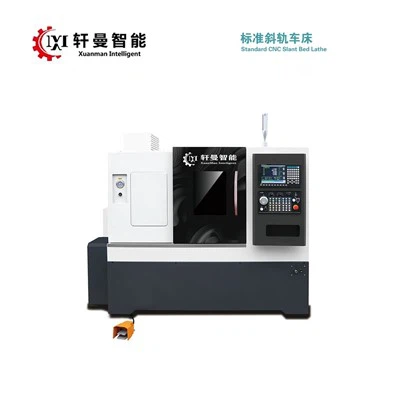
First, let’s start with why vertical lathe tools have specific storage needs—something horizontal mill and lathe tools don’t share. Vertical CNC lathes spin workpieces (often large, heavy parts like gear blanks, valve bodies, or turbine housings) while the cutting tool stays stationary, mounted to a turret or tool post above. That means vertical lathe tools are almost always larger, longer, and designed to handle higher axial and radial cutting forces than tools for horizontal equipment. A 4-inch diameter face mill for a vertical lathe, for example, isn’t the same as a 2-inch end mill for a horizontal mill—it’s heavier, has larger insert seats, and its precision-ground shank can be ruined by even a minor impact or moisture buildup. Cut corners on storage, and you’ll ruin the tool’s runout, which leads to poor surface finishes, dimensional errors, and even tool breakage mid-cut.
The first non-negotiable step: segregate your tools by type and holder before you even put them away. I see too many shops throw every loose tool into a bin, and it’s a disaster waiting to happen. For vertical lathes, tools fall into two main categories: solid tools (like high-speed steel drills, reamers, and solid carbide end mills) and indexable tools (face mills, turning inserts, boring bars, where replaceable inserts mount to a steel or carbide body). Each needs different handling, and both need to stay separated from other tools to avoid contact damage. Solid tools, with their sharp ground edges, can chip if they bang against a turning insert’s cutting edge. Indexable inserts, which are precision-ground to tolerances of a few thousandths of an inch, can get nicked if a heavier tool slides into them. When you mount a nicked insert to a vertical lathe’s tool post, that tiny nick becomes a vibration source that travels through the entire machine—wearing out spindle bearings faster, leading to more downtime.
That’s why I recommend a dedicated storage system for vertical CNC lathe tools, not generic drawer dividers. For indexable insert tools, use foam tray inserts cut to match the exact shape and size of each tool body. Most tooling suppliers sell custom-cut polyethylene foam that fits standard 3-inch, 4-inch, and 6-inch face mills, boring bars up to 24 inches long, and turning tool holders for vertical turrets. The foam cradles the tool so there’s no movement, and you can label each slot with the tool’s part number, diameter, and last calibration date—no more guessing which slot holds the 5-inch face mill for steel versus the one for aluminum. For solid tools like drills or reamers, use a vertical tool rack with individual slots sized for each shank diameter. Unlike horizontal tool racks that lay tools on their sides, vertical slots keep the tool’s long shank straight, so you don’t have to bend it later to mount it to the lathe. Bending a shank even a tiny amount ruins its concentricity, which causes runout and uneven tool wear on vertical lathes.
Next, moisture control is a make-or-break factor, especially if your shop uses high-pressure coolant (HPC) for vertical lathe operations. Vertical machines are often set up for deep cuts on large parts, so operators rely on HPC to flush chips away—but that coolant sticks to tools like glue. If a carbide insert or high-speed steel drill is stored wet, even for a few days, it’s a ticking time bomb for corrosion. Carbide is tough, but the binder (cobalt) in carbide can corrode if exposed to moisture and shop air for extended periods. High-speed steel tools, which are softer than carbide, will develop rust pits that chip during cutting, ruining a part. I had a customer in aerospace last year who stored a set of 10 solid carbide drills for turbine blade holes in a plastic bin that had leftover coolant at the bottom. Half the drills developed cobalt corrosion, and when they tried to use them, they broke during a hole operation, ruining a $15,000 test part. The fix here is simple: after cleaning a tool before storage, dry it completely with lint-free compressed air (set to 80 PSI max—too much air can blast away the tool’s precision coatings) and then apply a thin coat of tool-specific anti-rust oil. Wait 10 seconds, then wipe off the excess so it doesn’t attract more dust and chips. For indexable inserts, don’t just oil the tool body—blow out the insert seats with compressed air to remove any coolant or chips, then apply a tiny amount of anti-rust oil to the seats before closing the tool’s protective case. I always tell customers: if you can see a wet spot on a tool before storage, you’re doing it wrong.
Then there’s the issue of chip contamination, which is often overlooked. Shop chips (steel, aluminum, cast iron) are tiny, hard particles that get everywhere—and they’re the enemy of precision tooling. If a chip gets between a tool holder’s shank and the turret’s mount, it will create a gap that causes runout, which is deadly for vertical lathes. Even a 0.001-inch gap from a chip can lead to a 0.002-inch dimensional error on a 10-inch diameter part—enough to make it unfit for automotive or aerospace use. To prevent this, never store tools in the same area as chip bins or dirty workbenches. If your shop has a central chip removal system, store tooling in a climate-controlled tool room separate from that area, or at least on a raised shelf 2 feet off the floor, away from any dust or chip dust that drifts. For tools that are mounted in holders (which most vertical CNC lathe tools are, for quick change), always cap the holder’s tapers with a protective plastic plug after removing it from the machine. The taper is the part that fits into the lathe’s spindle, and even a tiny chip or scratch on that taper will throw off alignment. I’ve seen shops skip this step, pull a tool from storage, and spend 20 minutes adjusting spindle runout before they can even start a job—wasting time that could be spent cutting parts.
Now, let’s talk about the specific needs for different types of vertical CNC lathe tools, because not all tooling is created equal. First, turning tools—used for facing, grooving, and threading on vertical lathes. These tools have a very precise shank that locks into the turret, so they can’t be stored leaning or stacked on top of each other. Stacking turning tools bends their shanks, as I mentioned earlier, and can chip the insert’s cutting edge. Store each turning tool in its own foam slot, oriented horizontally so the shank is straight and the insert is facing away from other tools. For face mills, which are large and heavy, use a dedicated wall mount rack with individual pegs that fit into the face mill’s center bore. Hanging them this way keeps the cutting edges off the ground and away from other tools, and the weight of the tool is distributed evenly, so there’s no stress on the tool’s body. Solid carbide end mills and drills, which are long and thin, should be stored in vertical racks with slots that match their shank diameter—never in a drawer where they can lean and bend.
There’s also a common mistake with insert storage specifically. A lot of shops throw loose inserts into a drawer, but indexable inserts are precision components with chamfered edges that can be damaged easily. Loose inserts will bang into each other, nick their cutting edges, or get covered in chip dust, and when you mount them, that nick will cause vibration. The solution? Use small labeled containers for each insert type, with foam inserts that hold each insert individually. Label the containers with the insert’s ISO number, grade (coated carbide, cermet, etc.), and the part number it’s used for. That way, you don’t mix up inserts for steel with inserts for aluminum, which is a whole other problem. I’ve seen a shop ruin a batch of 100 gear blanks because they used aluminum-grade inserts on steel—costing them $3,000 in scrapped parts, all because they grabbed the wrong insert from a bin.
Now, let’s get into the long-term storage of tools you don’t use every day. A lot of shops keep a “spare” set of tools for when their active set wears out, but if those spares are stored for months or years improperly, they’ll be useless when you need them. For tools in long-term storage (over 3 months), you need an extra layer of protection. Wrap each tool in anti-tarnish paper, which is treated to prevent moisture and corrosion, and place them in airtight plastic bins with desiccant packets. Desiccant absorbs any residual moisture in the bin, so even if there’s a small leak, the tools stay dry. For indexable tools, remove the inserts before long-term storage, clean them thoroughly, coat them with a thin layer of anti-rust oil, and store them in their individual foam slots in the same bin as the tool body. That way, you don’t lose inserts or mix them up when you go to use them.
Finally, a quick note on regular inspections, which are part of good storage practice. Every time you take a tool out of storage, do a quick visual check: look for rust on the shank, nicks on cutting edges, bends in the shank, or chips on insert seats. If you notice any of these, don’t use the tool until you fix it—either regrind a bent shank, replace a nicked insert, or clean a rusted shank with a fine-grit steel wool. I tell customers that a 2-minute inspection after storage can save you hours of downtime and thousands of dollars in scrapped parts.

At the end of the day, proper tool storage isn’t just about organizing your shop—it’s about protecting your investment. Vertical CNC lathe tools aren’t cheap; a single 6-inch face mill can run $500, a set of solid carbide drills can be $800, and a single indexable insert can be $20 or more. When you store them right, you extend their life by 30% or more, reduce downtime from tool breakage, and improve the quality of your finished parts. If you’re looking to upgrade your vertical CNC lathe and want to work with a partner who knows tooling and storage best practices, don’t hesitate to reach out.
Vertical CNC Lathe References
- Machining Data Handbook, 5th Edition, Manufacturing Engineering Associates, 2021
- Tooling Storage Best Practices for CNC Machining, Modern Machine Shop, 2022
- Corrosion Resistance of Carbide Cutting Tools, International Journal of Machine Tools and Manufacture, Vol. 64, 2012
- Vertical CNC Lathe Tooling Requirements, SME Technical Paper, 2020
- Runout Effects on CNC Machining Precision, Journal of Manufacturing Processes, Vol. 35, 2018
Jiangsu Xuanman Intelligent Equipment Co., Ltd.
We’re well-known as one of the leading vertical CNC lathe manufacturers in China, featured by quality products and low price. Please rest assured to buy discount vertical CNC lathe made in China here from our factory. We also accept customized orders.
Address: No. 1-1, Weier Road, Jieji Equipment Manufacturing Industrial Park, Sihong County, Suqian City, Jiangsu Province, China
E-mail: jsxmzn@163.com
WebSite: https://www.xm-cnc.com/
