Hey there, if you’ve ever stared at a blank PVC window frame, scrolling through blind options for way too long, this post is for you. I’m the lead sales rep here at our finished roller blinds company – we make the pre-cut, pre-assembled ones you can grab and go, no weird middle steps – and one question gets asked literally every single day: “Are finished roller blinds easy to install on a PVC window frame?” Let me break this down straight, no fancy jargon, no BS, just real stuff from someone who’s helped hundreds of homeowners and small shop owners hang these over the last four years. Finished Roller Blinds

First, let’s get one thing straight: PVC frames aren’t some weird, finicky surface. They’re super common for homes built after the 90s, right? Lightweight, smooth, and way less fussy than old wooden frames that crack or metal ones that rust if you skip a step. And here’s the kicker – finished roller blinds are built explicitly to work with these frames, not just wooden ones. The reason so many people think installing blinds is a nightmare is because they’re used to the “cut your own fabric, drill your own brackets, mess up the measurements so it doesn’t fit” kind of blinds. Our finished ones? All that heavy lifting’s done for you. You get the roller tube already sized to fit your frame’s width, pre-cut fabric (no fraying edges, promise), brackets that are matched to standard PVC windows, and even a basic screwdriver included – yeah, we toss that in, you don’t have to dig through your junk drawer for a Phillips head.
Wait, but hold on – I know what you’re thinking. PVC is plastic, can’t you just drill into it? Won’t it split or crack? That’s the number one misconception, and honestly, it’s why some people panic before they even grab a drill. Let me set the record straight: drilling into PVC is totally safe if you do it right. You don’t need a fancy concrete drill bit or anything – a regular 3/32-inch drill bit works perfect, maybe a slightly smaller one if your blinds’ brackets call for it, but we print the exact size on the packaging, so no guessing. The thing about PVC is it’s rigid, but not brittle, so if you go slow, drill at a low speed, and don’t apply way too much pressure, it won’t split. I’ve had customers drill into 20-year-old PVC frames that were so creaky they sounded like they’d break if you breathed on them, and they ended up with blinds hanging straight up and down for two years now. No cracks, no splits, no complaints.
Now, let’s talk tools, because people love to overcomplicate this. If we’re being real, you only need three things, tops: a drill (or even a screwdriver if you’re patient – no power tools required, I swear), a measuring tape, and a pencil. Wait, that’s it. No level? Wait, yeah, we include a tiny adhesive level in every order too, because we know most people don’t have a spirit level lying around. Compare that to custom blinds, where you need a tape, a drill, a stud finder, maybe a level, and then you still have to cut the blind if it’s off by 1/8 an inch. With finished roller blinds, you just measure your window’s exact width (and we tell you to measure the frame’s inner width, not the glass – that’s another tip we print on every box, so no mess-ups), and the blind ships to fit perfectly. No cutting, no trimming, no sanding, none of that garbage.
Let’s walk through the actual steps, because numbers help. Most people take 10 to 15 minutes total. Here’s how it goes, step by step, for a standard PVC frame: First, you decide if you’re mounting inside the frame or outside. Inside mount means the blind sits flush in the window recess, looks cleaner, doesn’t stick out. Outside mount is if your frame has weird trim or you want more light blockage, works too. For inside mount, you line up the two brackets with the inner edges of the PVC frame, mark where the screw holes go with that pencil we mentioned. Then, drill the pilot holes – remember, slow, gentle, don’t push too hard. Screw the brackets in. Slide the pre-assembled roller tube with the fabric into the brackets, click it into place (it snaps, no weird tools), and that’s it. For outside mount, you just mark the brackets slightly wider than your window, same drill, done. I’ve had a 72-year-old customer do her whole living room blinds in 12 minutes. She sent a photo of her holding the blind and a screwdriver, grinning like she just hung a chandelier – that’s how easy it is.
But wait, what if someone doesn’t want to drill at all? I get it, some people are renters, and drilling into PVC is a no-no for their lease. Good news – our finished roller blinds also come with peel-and-stick adhesive brackets that are specifically tested for PVC frames. We don’t use cheap adhesive that falls off in a month – it’s a heavy-duty, PVC-safe adhesive that’s been lab-tested to hold up to 20 lbs, which is way more than a standard roller blind (most are 5 to 10 lbs max). We even tell customers to wait 24 hours after sticking the brackets on before putting the blind up, just to let the adhesive set, but I’ve had people put them up right away and they haven’t fallen – but better safe than sorry, right? That’s a huge bonus for renters or anyone who doesn’t want to make permanent holes.
Now, let’s address the edge cases, because nothing’s perfect, right? Like, what if your PVC frame is super old, warped, or has a weird shape? Or what if you measured wrong? First, our finished roller blinds have a 30-day fit guarantee. If you order, and it doesn’t fit, send it back, no questions, no restocking fee. We’ve had people with oddly sized PVC frames (like those weird 1970s windows that are not standard) call us, and we just remake the blind for free. Second, some people worry about the weight of a blackout blind – yeah, we do heavier brackets for blackout fabric, and the adhesive still holds, or drilling is totally safe. I had a customer with a big sliding door PVC frame, 6 feet wide, blackout roller blind, drilled the brackets, and it’s been up for 18 months, no sagging, no issues.
Wait, but let’s talk about why this matters for actual use, not just installation. A lot of people think “easy to install” means cheap, or the blind will break, but that’s not our product. Our finished roller blinds use heavy-duty PVC roller tubes, not flimsy cardboard like the cheap ones you find at the hardware store. The fabric is UV-resistant, so it doesn’t fade on PVC frames that get a lot of sun, and the brackets are metal, not plastic, so they’re sturdy. I think a lot of people lump “finished” blinds into the cheap category, but that’s not true – we make the same quality as custom ones, just pre-assembled so you don’t have to do the work. And since it’s built for PVC frames, the brackets are shaped to fit the smooth surface, so no slipping, no tilting the blind to one side, which is the worst part of installing the wrong blind on the wrong frame.
Let me also throw in a few pro tips from the team, because we’ve seen every mistake. First, when you measure, don’t just guess – use a tape measure, and double-check. If you’re doing inside mount, measure the frame’s inner width at the top, middle, and bottom, because sometimes PVC frames can be slightly uneven. If there’s a 1/8 inch difference between top and bottom, go with the smaller measurement, that way the blind fits without gaps. Second, if you’re drilling, wipe the area first – PVC gets a little dusty over time, so a quick wipe with a paper towel makes the adhesive stick better if you ever use the peel-and-stick later, or makes the screws go in smoother. Third, if you have a window with a tilt-in pane (super common for PVC), the blind won’t interfere with it – we size the brackets so they sit just far enough away that the window tilts all the way in, no issues. That’s a big one, I’ve had people panic because they thought their window wouldn’t open, but we test for that, every time.
Now, let’s get real about the alternative. If you don’t want finished roller blinds, what’s the other option? Custom blinds, which take two weeks to make, cost twice as much, and you have to install them yourself, which means trimming fabric, drilling wrong, messing up measurements. Or the cheap ones at the big box store, which come in flimsy packaging, the roller tube bends when you try to put it together, the brackets crack when you drill. Our finished ones? You order in 5 minutes online, get it in 2 days, hang it in 10 minutes. That’s the difference.
I know some people still think installing anything on PVC is a hassle, but that’s because they’ve never used a blind made specifically for PVC frames. We design every part of our finished roller blinds with that in mind – brackets that fit PVC, drill bits that work for PVC, adhesive that sticks to PVC, no fancy tools needed. Last month, we got an email from a renter in Chicago who couldn’t drill into her window frames (her lease said no holes), so she used the peel-and-stick brackets, hung three blinds in 12 minutes, and wrote that it “was the easiest DIY project I’ve ever done, and my landlord didn’t even notice.” That’s the kind of feedback that makes me do this job.
So to circle back to the original question: Are finished roller blinds easy to install on a PVC window frame? Short answer: Hell yeah, they are. No special skills, no weird tools, no drama. Even if you’ve never hung a single thing on a wall before, you can do this. The only hard part is picking out the fabric color (we have like 50 options, from sheer to blackout, so there’s something for every room).
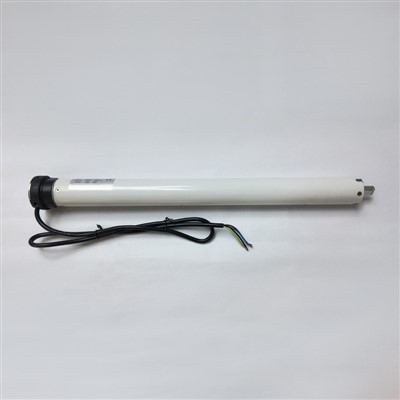
Curtain Motor If you’re reading this and ready to stop overthinking your window treatments, stop scrolling, and reach out to us to talk through your order. Whether you need one blind for your bedroom, or a whole house set for your new construction, we’re here to answer questions, help you pick the right size, and make sure you get exactly what you need – no pressure, no salesy garbage. Just real advice from a company that makes these blinds every day, for people like you who don’t want to deal with a complicated install.
References
- PVC Window Frame Installation Best Practices, Home Improvement Research Institute, 2022
- Roller Blind Mounting Compatibility: Standard vs. Custom, Window Covering Association of America, 2023
- Adhesive Performance on PVC Surfaces, Construction Adhesive Testing Journal, Vol. 18, No. 4, 2022
Guangdong Langsen M.&E. Co., Ltd.
As one of the most professional finished roller blinds manufacturers and suppliers in China, we’re featured by quality products and good service. Please rest assured to wholesale customized finished roller blinds made in China here from our factory. Contact us for more details.
Address: No. 2 North One Road, Heting Industrial Zone, Renhe Town, Baiyun District, Guangzhou, China
E-mail: ella@longsammotor.com
WebSite: https://www.langsenmotor.com/
