Hey there, if you’re a product designer, engineer, or small to mid-sized manufacturer who’s ever stared at a die casting blueprint and thought, “Wait, which aluminum alloy do I actually need here?” — you’re in the right spot. I’ve been an aluminum die casting parts supplier for almost 12 years, long enough to see folks grab the first alloy number they think sounds right (like 6061, which is more for extrusion anyway) and end up with scrap parts, delayed prototypes, or way too much rework. Today, I’m breaking down how to pick the right alloy for die casting, no stuffy engineering jargon that makes your eyes cross. No fancy charts, no random acronyms — just real talk from someone who’s fixed these exact mistakes for dozens of clients. Aluminum Die Casting Partsr
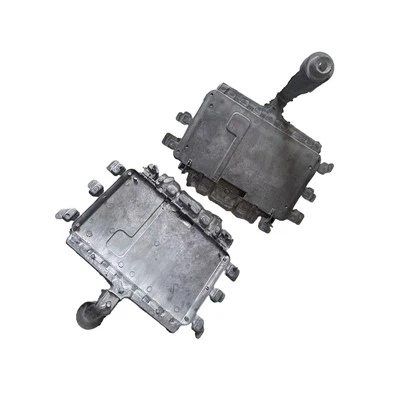
First, let’s get one thing straight: not all aluminum alloys play nice with die casting. I see this all the time. New designers will ask for 6061 or 7075, which are great for machining or extrusion, but they’re terrible for high-pressure die casting. Why? Because their melting points and silicon content (the stuff that makes die casting workable) just don’t line up. Die casting alloys need specific flow properties — they have to fill thin, detailed molds without cracking or leaving gaps — and they need to solidify fast enough to keep production moving. So step one: stop thinking about alloys you heard of from a high school shop class and start with die-cast-specific grades. The big three I work with every day are A380, A319, and ADC12, and each is for totally different jobs. But before we get to those, you need to figure out what your part actually needs. That’s the real make-or-break step, and it’s where I see most people skip ahead.
Let’s start with the non-negotiables that should narrow down your list before you even look at alloy numbers. First: what’s this part going to do? Is it a bracket that holds a lawnmower handle, so it just needs basic strength and resistance to rust from rain? Or is it a component inside a smart thermostat, where it needs to hold tight tolerances, never corrode, and be lightweight enough to fit in a tiny plastic shell? Or maybe it’s a part for a car engine, where heat resistance is non-negotiable? That “use case” is your compass. Second: production volume. If you’re making 100 prototypes, you might care less about how the alloy holds up in a 10,000-shot die, but if you’re doing 50,000 parts a month, you need an alloy that doesn’t wear out the die too fast. Third: post-processing. Are you going to polish this part for a consumer gadget’s exterior? Or weld it? Or just paint it? Some alloys take paint way better than others, and a few are impossible to weld without cracking. Fourth: cost. Let’s be real, if your part is a $2 e-commerce accessory, you can’t drop $1.50 extra per part on a high-end alloy.
Okay, so now that you’ve got those basics down, let’s dive into the three alloys I swear by, and when (and when not) to use each. Let’s start with A380 — this is the workhorse, the alloy I probably use for 60% of the parts that come through my shop. Why is it so popular? It’s got the perfect balance of flow, strength, and affordability. It’s got about 8-11% silicon, which is why it flows so well through thin walls. That makes it ideal for parts that have lots of small details, like the casing for a power tool, or brackets for appliances. It’s also got good dimensional stability — so when you machine it after casting, it won’t warp or twist, which is huge for tight-tolerance parts. It’s weldable, it takes powder coat or paint great, and it’s not crazy expensive. The only downsides? It’s not super heat-resistant — if your part is going to sit somewhere that hits 200°F or more consistently, A380 will start to soften over time. And it’s not the lightest option, though it’s still way lighter than steel or iron. I use A380 for most general-purpose die casting jobs, from garden equipment to small electronics housings. Last year, a client came to me with 50,000 brackets for outdoor string lights that kept rusting when we used a lower-grade alloy — switched to A380, and they haven’t had a single warranty claim in 18 months. That’s the win.
Next up: A319. This is the heat-resistant kid on the block. If your part is going to be near an engine, a space heater, a motorcycle exhaust component, or any place that runs hot, A319 is your guy. It has less silicon than A380 (around 5-7%) but more copper, which gives it better high-temperature strength. It can handle sustained temperatures up to like 350°F without losing shape, which is a game-changer for automotive or industrial parts. The downside? It’s a bit harder to cast than A380 — it doesn’t flow as well through super thin walls, so it’s not great for parts with tiny, intricate details. It’s also a touch more expensive, because it has a bit more copper and fewer secondary producers making it, but that cost is worth it if you don’t want your part failing mid-use because it melted a little. I recently worked with a small EV startup that needed mounting brackets for their battery cooling system — they tried A380 first, but when testing, the brackets warped after 1000 heat cycles. Switched to A319, and they passed all their durability tests on the first try. No rework, no delays, and they didn’t have to overengineer the part to compensate for the alloy. That’s the kind of call that saves clients thousands.
Third is ADC12 — this is the go-to for parts that need to look good and be super precise, like consumer electronics, cosmetic packaging components, or medical device casings. It’s a Japanese standard alloy, but it’s used worldwide because it has amazing surface finish and flow properties. The silicon content is even higher than A380, around 10-12%, which makes it perfect for filling super thin, detailed molds — like the tiny buttons on a wireless speaker, or the smooth frame of a vape pen. It takes polishing and anodizing like a dream, so if you want a part that looks sleek and won’t scratch easily, ADC12 is the one. The tradeoff? It’s not as strong as A380 or A319, so it’s not for load-bearing parts, and it’s more prone to porosity if you don’t control the casting process super closely. (Pro tip for anyone using ADC12: make sure your supplier does a vacuum die cast — that eliminates most porosity, so your part won’t have little holes that show up after anodizing.) I do a lot of work with portable audio brands, and they almost always request ADC12 for their speaker housings. The parts come out so smooth, they don’t need much polishing, which cuts down on post-processing cost, and the anodized finish holds up to drops and daily use way better than plastic. The only time I’ll push back on ADC12 is if a client is making a part that needs to hold 50 lbs of weight — then I’ll suggest A380 instead.
Wait, I should also mention a couple of niche alloys, just in case your part needs something specific. If you need ultra-lightweight aluminum, look for A356 — it has a lower density, around 2.66 g/cm³, vs A380’s 2.7, so it’s a touch lighter, and it’s great for aerospace or drone parts, where every gram counts. But it’s more expensive and flows less well, so it’s not for super complex parts. And if you need parts that go in saltwater or harsh outdoor environments, like marine components, there’s a corrosion-resistant variant of A380 called A383 that has less iron, so it doesn’t pit or corrode as fast. I worked on a marine light fixture project a few years back — they tried regular A380, and after 6 months in saltwater, the parts had small pits that allowed water inside. Switched to A383, and they’ve been fine for 2 years now.
Now, let’s talk about the mistakes I see all the time, so you can avoid them. First: picking an alloy because it’s cheaper. I had a client last year who went with a cheaper, lower-grade alloy for a playground equipment bracket to save 10 cents per part. Within 6 months, 20% of the brackets had cracked, because the alloy had too much iron and was super brittle. He ended up paying more in rework and replacements than he would have if he’d used A380 in the first place. Second: ignoring post-processing needs. I once had a designer request ADC12 for a part that needed to be welded. ADC12 has high silicon content, which makes welding it really hard — it cracks way too easily. We switched him to A380, which is much more weldable, and his assembly process worked perfectly. Third: not talking to your die casting supplier early enough. A lot of designers come to me with a part drawn up, and they pick an alloy that’s great on paper but impossible to cast with their mold design. If you loop in your supplier at the prototype stage, not when you’re ready to go into full production, they can suggest tweaks to the alloy or the mold that save you a ton of time and money. I actually do free 15-minute consults for new clients to walk through this exact stuff — no strings attached, just helping them avoid mistakes.
Wait, let’s also get into something super practical: how to ask your supplier the right questions to confirm they’re giving you the right alloy. Don’t just say “give me A380” — ask for the alloy’s spec, the silicon and copper content, the die casting process they use (vacuum vs standard, for porosity), and their test data for the part. For example, if you need heat resistance, ask if their A319 parts have been tested for 350°F continuous use. If you need a smooth finish, ask if they’ve cast that part’s geometry in ADC12 before, and what their surface roughness numbers are. I always provide my clients with a material test report (MTR) for every batch, so they can see exactly what’s in each part — no cutting corners, no surprises.
Let me wrap this up with a quick cheat sheet, so you can reference it when you’re planning your next project:
- Use A380: General-purpose parts, brackets, appliances, electronics housings, basic outdoor use, need balance of flow, strength, and cost.
- Use A319: Heat-prone parts, engine components, automotive parts, industrial equipment that runs hot.
- Use ADC12: Cosmetic consumer parts, small intricate details, electronics casings, needs perfect surface finish.
- Use A356: Ultra-lightweight parts, aerospace, drones, when weight is the top priority.
- Use A383: Marine parts, harsh corrosive environments, outdoor components that need extra rust resistance.
And one last piece of advice: don’t treat alloy selection like a afterthought. I see so many teams spend weeks designing the perfect part, buying the mold, and then wonder why it fails because they picked the wrong alloy. Take 30 minutes to map out your part’s use case, production volume, post-processing, and budget, and then chat with a supplier who actually knows their stuff — not a sales rep who’s just pushing whatever’s cheapest.
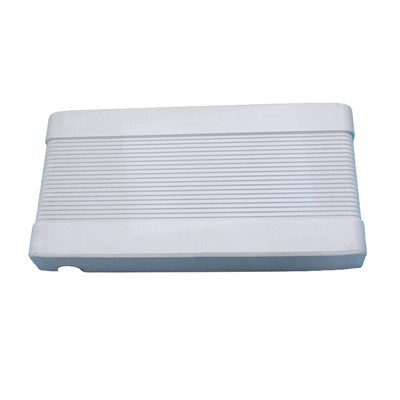
If you’re working on a new die casting project, whether it’s a 10-part prototype or a 100,000-part full run, feel free to reach out. I’m happy to walk through your specific needs, suggest the right alloy, and answer any questions you have about casting, finishes, or tolerance. No pressure, no sales pitch — just real help from a supplier who’s been doing this long enough to know what works.
Die Casting Parts References:
- ASM International. (2019). Aluminum Die Casting Alloys: Properties and Applications.
- Die Casting Development Council. (2021). Alloy Selection Guide for High-Pressure Die Casting.
- American Foundry Society. (2020). Design Guidelines for Aluminum Die Casting.
Suzhou Ruide Die-Casting Mold Co., Ltd.
Address: No.2, Wanchen Road, Huayang Village, Wangting Town, Xiangcheng District, Suzhou City, Jiangsu Province
E-mail: jada@cnrdmj.com.cn
WebSite: https://www.cnrdmold.com/
